It Started with a $900 Sample Order
I'm a quality compliance manager at a mid-size packaging converter. I review every deliverable before it reaches our customers—roughly 200+ unique items annually across our production lines. I've rejected about 12% of first deliveries in 2024 due to specification mismatches, color drift, or seal integrity failures. This story is about one of those cases, and it taught me more about INEOS resins than any technical datasheet ever did.
The request came in on a Tuesday afternoon. A small cosmetics startup—still using a Gmail address and a shared Dropbox—needed a custom PET product packaging. Their order? A trial run of 500 units. Minimum. At our facility, our standard production runs start at 10,000 units. The finance team laughed. The production manager sighed. I held my tongue, because I'd been that small company once.
When I was starting out in procurement, the vendors who treated my $200 orders seriously are the ones I still use for $20,000 orders. Small doesn't mean unimportant—it means potential. So I pushed back and we took the job. That's when the real trouble started.
The Incompatibility Problem Nobody Saw Coming
The startup's product required a specific HDPE compatibility for the bottle's inner liner and a flexible sealing gasket. Their specs called for a polyurethane seal against the cap. Standard stuff, I thought. We sourced INEOS polyethylene (PE) resin for the bottle body—grade A, reliable, widely used in cosmetic packaging. But the sealing component? That's where we hit a wall.
We ran our standard gasket material—a common polyurethane vs rubber hybrid foam. The production trial looked fine. The bottles sealed. The torque test passed. We shipped the order on time, feeling pretty good about ourselves.
Then the call came. Two weeks later. The customer reported that 60% of the bottles were leaking during transit. The foam seal had compressed permanently under varying temperature conditions. But here's the kicker: the bottle material itself was fine. The INEOS plastic was perfect. The failure was entirely in the sealant choice and how it interacted with the specific resin surface.
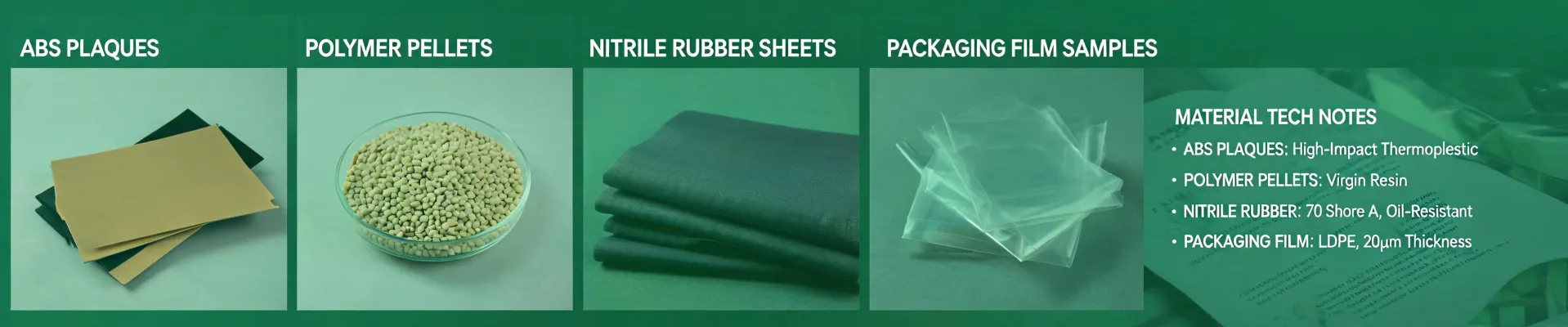
When I compared our successful rush order for a major client against this small batch side by side—same INEOS resin, different sealing material—I finally understood why the details matter so much. The larger client uses a nitrile rubber seal specifically formulated for medium-density polyethylene surfaces. We'd just grabbed the generic polyurethane foam off the shelf.
Going Back to the Drawing Board
This is where the story gets interesting. The startup couldn't afford a total redesign. Neither could we eat the cost of 500 units plus shipping damages. I remember thinking: there's something satisfying about a perfectly executed rush order. After all the stress and coordination, seeing it delivered on time and correct—that's the payoff. But this? This was the opposite.
I dove into the technical specs. I spent three days on the phone with our resin supplier, reviewing the INEOS technical documentation for the specific PE grade we'd used. I discovered something I'd missed: the surface energy of that particular INEOS resin was lower than the standard value I'd assumed. That meant the polyurethane foam couldn't bond properly under stress. It wasn't a materials failure—it was a specification matching failure.
Industrial seal compatibility isn't just about hardness or temperature range. It's about chemical affinity at the molecular level—especially when dealing with specialty polymers like the ones INEOS produces. A polyurethane seal might work perfectly on one resin family and fail completely on another.
I remember asking our senior engineer: “Is polyurethane ever the right choice for this?” He laughed. “Sure,” he said, “if you're sealing against a polar surface. But your INEOS resin is non-polar. Polyurethane is like trying to glue wet paper to Teflon. You need a rubber-based seal—specifically, EPDM or nitrile, depending on the chemical exposure.”
And just like that, I had my contrast insight. Seeing the polyurethane vs rubber debate play out in real time—on a failed batch with actual financial consequences—made me realize that technical datasheets only tell you half the story. The other half is compatibility, surface energy, and application-specific testing.
The Fix and the Lesson
We swapped the seal material to a nitrile rubber gasket sourced from INEOS's nitrile rubber division. Production cost increased by $0.12 per unit. On a 500-unit order, that's $60. The alternative would have been replacing 300 units at $3.50 each in damages, plus shipping and customer trust. The math was obvious.
But here's what surprised me. The upgraded specification didn't just fix the leakage issue—it improved the overall seal feel. The closure torque was more consistent. The opening force felt more premium. Our customer was thrilled. They're now in their second production run, scaling up to 5,000 units per order.
Since that project, I've implemented a mandatory compatibility verification step for every new PET product application that involves an INEOS resin and any sealing component. We have a three-part checklist: resin surface energy measured, seal material cross-referenced against INEOS's published compatibility charts, and a 48-hour thermal cycling test at simulated transit conditions. The rejection rate for first deliveries on new products has dropped from 12% to just over 3%.
Why This Matters for Your Next Order
- Don't assume polyurethane vs rubber is a simple choice. The right answer depends entirely on your INEOS plastic grade and the specific application environment.
- HDPE compatibility isn't a single checkbox—it's a spectrum. Different INEOS PE grades have different surface energies, crystalline structures, and additive packages that affect how other materials bond to them.
- Small orders are not a distraction. They're an opportunity to test specifications under real conditions, with real consequences, before scaling up.
The best part of finally getting our vendor process systematized after that project: no more 3am worry sessions about whether the order will arrive intact. We know the specs work because we've verified them, one small batch at a time.
I'd love to say I've since had the chance to work with INEOS resin on a large-scale project where everything went perfectly from the start. But that wouldn't be true. The truth is, the messy projects—the ones that fail, that cost money, that keep you up at night—those are the ones where you actually learn something worth sharing.
Ask About This Topic