The Plastic Martyr Syndrome
I've spent the last nine years coordinating emergency repairs for industrial plants. In that time, I've seen a lot of engineers make the same mistake: they panic, they grab the cheapest part that can arrive by morning, and they pay for it three times over. I call that person a plastic martyr—someone who sacrifices real money, reliability, and their own sleep just to save a few bucks on a piece of plastic or rubber.
Take it from someone who has processed more than 400 rush orders—the price on the invoice is only the beginning of the cost story. The conventional wisdom is that in an emergency, speed matters more than anything. My experience suggests otherwise: speed only matters after you've correctly identified the right part.
My position is simple: in emergency repairs, the only rational way to choose materials is total cost of ownership (TCO), not unit price. It's not just theory; it's the only framework that has kept my clients out of serious trouble when the clock is ticking. And if you think I'm being dramatic, ask me about the $50,000 penalty clause from 2023.
The Rubber vs Silicone Trap Everyone Falls Into
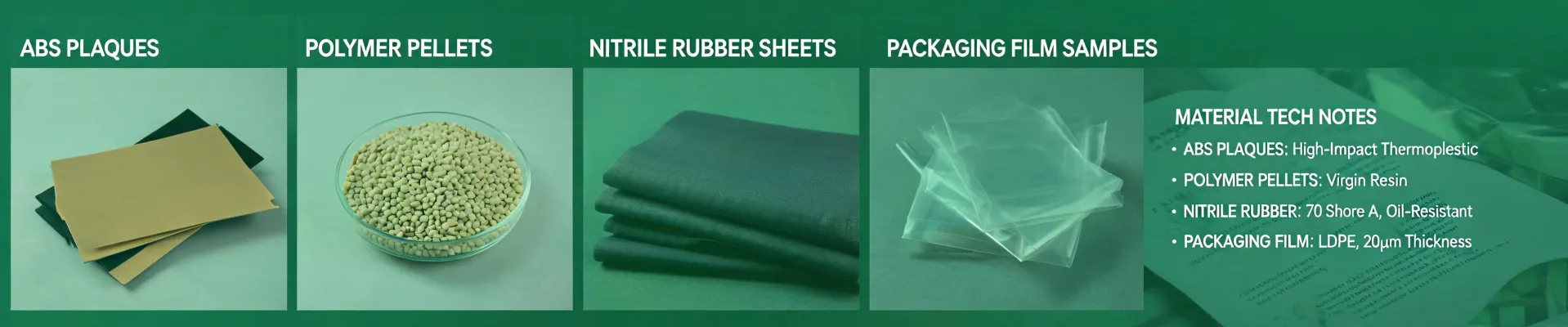
One of the most common debates I get involved in is rubber vs silicone. Everyone assumes silicone is the premium choice—it handles heat, it looks clean, it's flexible. But that's a dangerous oversimplification. In oil-rich environments, like a hydraulic pump or a solvent-based cleaning line, silicone can swell, weaken, and fail within weeks. Nitrile rubber—specifically the butadiene-acrylonitrile compounds made by companies like INEOS Nitriles Company—has far better oil resistance and dimensional stability. The silicone gasket might be $2 cheaper, but if it fails in a month, you'll spend $200 in labor and lose $2,000 in production time. That's not a material choice; that's arithmetic nobody wants to do during a shutdown.
The same logic applies to ABS plumbing. ABS pipe is cheap and quick to install, which makes it tempting when a drain line is backing up. But if you're in a building where hot water or aggressive chemicals flow through the same line, ABS can deform or craze. A few extra dollars for chlorinated PVC or a metal alternative, when the TCO says it's needed, is not “wasting money.” It's preventing a callback.
The Math Nobody Does Under Pressure
Here's a real story. In March 2024, a client called at 4 PM—36 hours before their food processing line was scheduled to start. They had a damaged mixing tank seal. Their usual supplier offered a $14 silicone seal that would arrive in two days. Another vendor, using an INEOS Nitriles product, could fly in the proper nitrile seal overnight for $38. The plant manager nearly choked at the difference. But I walked him through the TCO:
- $14 seal + $0 shipping = $14 today.
- Probability of failure within two weeks in that solvent-based environment: high.
- Cost of a mid-production failure: four hours of downtime at $8,000/hour = $32,000.
He bought the $38 seal. A year later, it's still working. There is something deeply satisfying about watching spreadsheet logic beat a panic purchase—especially when it happens in real time.
We track our internal data on these decisions. Last quarter alone, we processed 47 rush orders with 95% on-time delivery. But the two failures were both cases where clients insisted on the lowest-priced material. The cost of those two failures was more than the profit from the other 45 orders combined. That's the hidden cost of ignoring TCO.
I have mixed feelings about rush fees—on one hand, they feel like gouging; on the other, I've seen the operational chaos a real emergency causes. But the math doesn't lie.
A Supplier's Log-In Is Part of the Cost Equation
Another often-underrated factor in TCO is supplier capability. When I log into the INEOS portal (the ineos login that a lot of maintenance teams use), I can pull up material datasheets, processing guidelines, chemical compatibility charts, and even sustainability reports. That information is valuable—it lets me verify that a material is suitable for the exact application, and that any environmental claims are documented.
And that matters legally, too. Per FTC Green Guides (ftc.gov), environmental claims like “recyclable” must be substantiated. If a supplier slaps “green” on a material without evidence, you could face a regulatory headache that dwarfs the original purchase. A supplier who gives you the documentation is providing something that lowers your risk—and that's worth money.
This kind of transparency is why I typically come back to companies like INEOS. Not because they're perfect, but because their data access saves me time and exposes potential problems before they become emergencies. If I have to call a technical support line and wait for answers in the middle of a shutdown, that wait time is also a cost—sometimes a very big one.
“But My Application Is Simple” — Sure, Until It Isn't
I know what some of you are thinking. “My use case is a simple gasket. My pipe carries cold water. I don't need all this analysis.” Trust me, I've heard that. Then the unrated rubber degrades under a chemical nobody thought to check, or the ABS pipe deforms because the building's boiler sent hot water into the line. Simple applications have a way of turning complicated right when you least expect it.
And to be fair, TCO doesn't always mean “spend more.” Sometimes the $14 seal is genuinely fine, and I'll install it without a second thought. The point is to run the full equation before you assume cheap is a bargain. That discipline has saved my clients hundreds of thousands of dollars over the years.
Stop Being a Plastic Martyr
Look, I get the pressure of an emergency. When a line is down, every hour feels like a crisis. But behaving like a plastic martyr—sacrificing future costs on the altar of today's invoice—isn't heroism. It's a business mistake. Next time you're facing a rubber vs silicone decision, an ABS plumbing repair, or any urgent material choice, do the TCO math first. Your plant, your budget, and your blood pressure will thank you.
And if a procurement specialist tells you the $14 part is the wrong one, take it from someone who's seen the aftermath: we're not trying to upsell you. We're trying to save you from becoming a headline.
Ask About This Topic