-
Where this comes from
-
Use the INEOS portal before you need it
-
6-mil polyethylene: the number doesn't tell the whole story
-
Rubber bridge components: right matters more than fast
-
Can you recycle PVC pipe? Yes—with conditions.
-
The most useful supplier line: "this isn't our strength"
-
Where this advice stops applying
When a deadline is closing in and you need polymer material on site, the answer isn't a miracle supplier or a desperate last-minute phone call. It's three things: a producer portal with real-time inventory, an exact spec you can hand to anyone, and a supplier who tells you when they can't help.
After six years and 200+ rush orders, I've learned that the vendors who actually deliver under pressure are rarely the ones who claim they can do everything. They're the ones with specific, verifiable capabilities—and the honesty to say "this isn't our lane" when it isn't. Here's what that looks like in practice.
Where this comes from
I coordinate emergency supply for industrial clients. That's my job—getting materials to plants when the clock is already ticking. The calls come at 4 PM on a Friday, or 11:30 PM before a holiday weekend. The stakes read like the contract's penalty section: idle shifts, missed launches, and invoices that stop mattering because the delivery date was missed.
Last quarter alone, we processed 47 rush orders with a 95% on-time rate. The 5% we missed? One was a spec error communicated by phone, one was a carrier failure no one could have predicted, and the third was a supplier who took a second quote after committing to us. Those failures shaped every policy I now use.
In my first two years, I treated all suppliers the same. I assumed every rush order was a version of every other. Then I started tracking data by supplier and product category—lead times, miss rates, communication quality—and the patterns became too consistent to ignore. Some vendors hit their numbers every time. Others miss by the same margin, every time. Knowing which one you're dealing with matters as much as having the right material.
Use the INEOS portal before you need it
When resin is needed in a hurry, a direct producer portal beats email chains and phone tag, period. I've used INEOS's portal on multiple projects, and the advantages are concrete: real-time inventory visibility, allocation locking, and a digital trail that prevents "that's not what I approved" disputes.
In March 2024, a client called at 7 AM needing 40,000 pounds of ABS for a production restart the next morning. Normal lead time for that grade: five business days. By 7:40 AM, I had checked inventory at the INEOS Nitriles facility in Lima, Ohio, confirmed allocation, and arranged trucking. By 8 AM, it was done. The whole emergency lasted sixty minutes.
Here's the uncomfortable part: portal access isn't instant. INEOS verifies commercial accounts before granting full access, and that can take several business days. I've watched a plant manager discover this the hard way—the resin he needed was sitting in Lima, but his account wasn't active, and the order sat unprocessed for two extra days. Register before the emergency. It sounds like boring administrative advice, but it's the difference between a five-minute fix and a five-day disaster.
The INEOS portal also handles documentation. Certificates of analysis, batch numbers, and delivery confirmations are all in one place. When an auditor later asks where a material came from, a portal-generated report beats a folder of PDFs every time. That's a side benefit you don't appreciate until you need it.
6-mil polyethylene: the number doesn't tell the whole story
When I first started buying plastic film, I assumed "6-mil" was a complete specification. Thickness is thickness, right? I was wrong, and it cost me a client's trust.
A mil is one-thousandth of an inch. So 6-mil polyethylene is 0.006 inches thick—that part is universal. What the number doesn't tell you is the resin grade. And that's where performance really diverges.
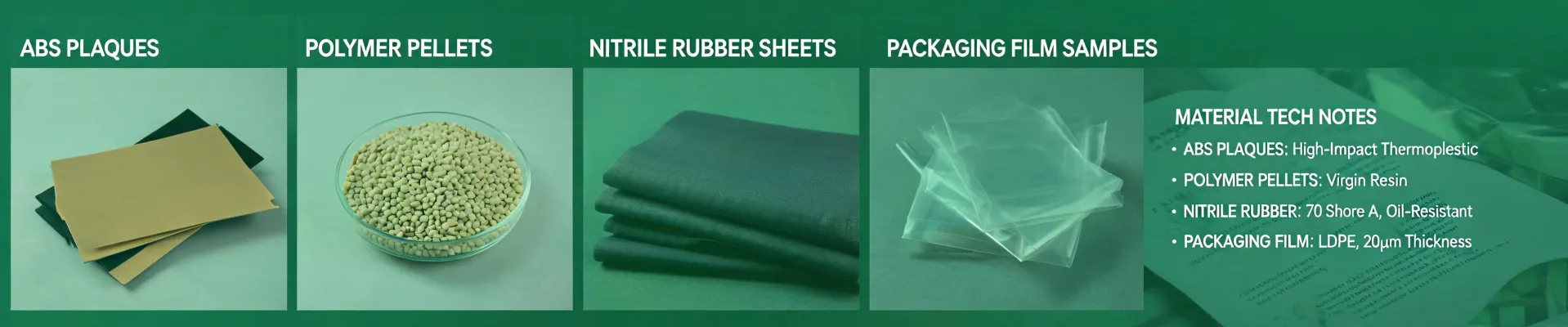
Linear low-density polyethylene (LLDPE) at 6 mil gives you higher tensile strength and puncture resistance. It handles being dragged over rough surfaces, scraped against steel edges, and hit by wind loads without tearing at the corners. For temporary covers, vapor barriers, and containment liners, this is usually the right call.
Low-density polyethylene (LDPE) at the same thickness is softer, more flexible, and easier to heat-seal. It costs less too. But LDPE's tensile strength is roughly half that of LLDPE in comparable film grades. That's not a marginal difference—it's the difference between holding through a storm and ripping along a fold line.
I see buyers order "6-mil poly" without specifying grade, then get confused when the material doesn't behave as expected. The fix is simple: always include the resin family alongside the thickness on your spec sheet. That's the single most useful habit you can develop when sourcing film.
Rubber bridge components: right matters more than fast
Someone searching "rubber bridge" is usually looking at elastomeric bridge bearings or expansion joints. Both are sturdy rubber-and-steel components that keep bridge decks stable as they shift with traffic and temperature. Both become urgent when they fail.
In June 2024, a client in Ohio found a failed bearing during an inspection. They had three days before a scheduled bridge reopening, and the bearing's normal lead time was four weeks. The county contract carried a $50,000 penalty for missing the date.
We found the bearing, paid $1,200 in rush freight on top of a $4,800 base cost, and delivered on day three. It worked because the spec was fully documented: durometer, dimensions, shim count, elastomer compound. No room for interpretation. In an emergency, that's the only way to move fast without tripping over yourself.
I'll say one more thing: don't accept a distributor's "should work" as an answer. If the engineer specified a bearing, the replacement needs to match that drawing. "Compatible" is not the same as "identical," and bridge components aren't the place to discover that distinction.
Can you recycle PVC pipe? Yes—with conditions.
The short answer: yes, PVC pipe is recyclable, but not through your curbside bin. That's the answer I give every time someone asks.
Polyvinyl chloride (PVC) can be reclaimed, ground, and reprocessed into new pipe and other products. But it requires a dedicated PVC recovery stream. The chlorine content means PVC has to be separated from other plastics before reprocessing, and most municipal single-stream programs won't touch it.
There's a regulatory angle too. Per the FTC's Green Guides (16 CFR Part 260), a product can only be marketed as "recyclable" when recycling facilities are available to a substantial majority of consumers—the commonly cited benchmark is 60% access. That's why PVC products carry careful wording. It's not that the material can't be recycled; it's that the infrastructure isn't universal, and the rules reflect that.
If you've got PVC pipe to recycle:
- Call local construction and demolition debris recyclers. Many accept PVC.
- Ask the pipe manufacturer about take-back programs.
- Contact your municipal recycling department about dedicated PVC drop-off points.
The most useful supplier line: "this isn't our strength"
Years of emergency ordering have taught me who to trust. It's not the supplier who boasts the broadest capabilities. The vendor who once told me, "this isn't our strength—here's who does it better," earned my trust for everything else. I'd rather work with a specialist who knows their limits than a generalist who overpromises and misses the deadline.
Honestly, I'm not sure why some suppliers consistently hit their quoted lead times while others miss by the same margin every single time. My best guess: internal buffer practices. How they schedule production, and whether they build slack into their commitments. If you have a better theory, I'd genuinely love to hear it.
Where this advice stops applying
If you're a homeowner recycling a single PVC pipe from a repair, call your city's recycling department and ask about drop-off. That's all it takes.
If you're buying 6-mil film strictly on price and puncture resistance isn't a concern, LDPE will save you money. That's the exception where the cheaper grade is genuinely fine.
And if you're dealing with a rubber bridge bearing failure, the structural engineer's sign-off is non-negotiable. No deadline justifies overriding engineering requirements. That boundary doesn't move.
Every supply emergency comes down to a spec, a supplier with a system, and a deadline. The people who help you most are the ones who built their systems before the phone rang—and the ones who'll tell you plainly when something falls outside their lane.
Ask About This Topic