If you're looking for a single "best" thermoplastic resin for wire and cable, you're going to be disappointed. The honest answer? There isn't one. The right choice depends entirely on the application's environment, regulatory requirements, and your production volume. I've spent the better part of a decade managing the procurement of materials like PP copolymers and PVC compounds, and I can tell you the cheapest quote on resins is rarely the cheapest solution overall.
So, let's break this down by three common scenarios. Think of this as a decision tree. Figure out which box your product fits into, and we'll talk about the material that makes the most sense—and a few pitfalls that might cost you.
Scenario A: General Purpose Indoor Wiring (The PVC Zone)
If your product lives inside an office wall, inside a computer case, or behind a drywall ceiling—where temperatures are stable, sunlight is non-existent, and fire codes are the main regulatory hurdle—PVC (Polyvinyl Chloride) is still the workhorse. And honestly, it's hard to beat for cost.
I remember auditing our 2023 material spend for a batch of standard power cords. We were looking at a generic PVC compound from a large supplier. The raw material cost was about $0.85/kg. We compared it to a TPE alternative that was quoted at $2.10/kg. The decision seemed obvious, right? Go with the PVC.
Don't hold me to this exact price, because resin costs fluctuate monthly, but the ratio held. The PVC was roughly 60% cheaper.
But the TCO trap I almost fell into was the processing speed. Our extruder line ran the PVC at 45 meters per minute. The TPE ran at 52 meters per minute. That 15% speed increase meant the TPE, despite being more expensive per kilo, actually reduced our total per-unit labor and machine overhead costs by about 8%. If you only look at the raw material cost, you'll miss the production efficiency.
My recommendation for Scenario A: PVC is your go-to for standard indoor wiring. It's cost-effective, has a proven track record over decades, and is easy to process.
But: If your production lines are running near capacity and you can leverage the faster processing of a TPE, do the full TCO math before dismissing the more expensive material.
Scenario B: Flexible Industrial Cables & Oil Resistance (The NBR / Nitrile Rubber Zone)
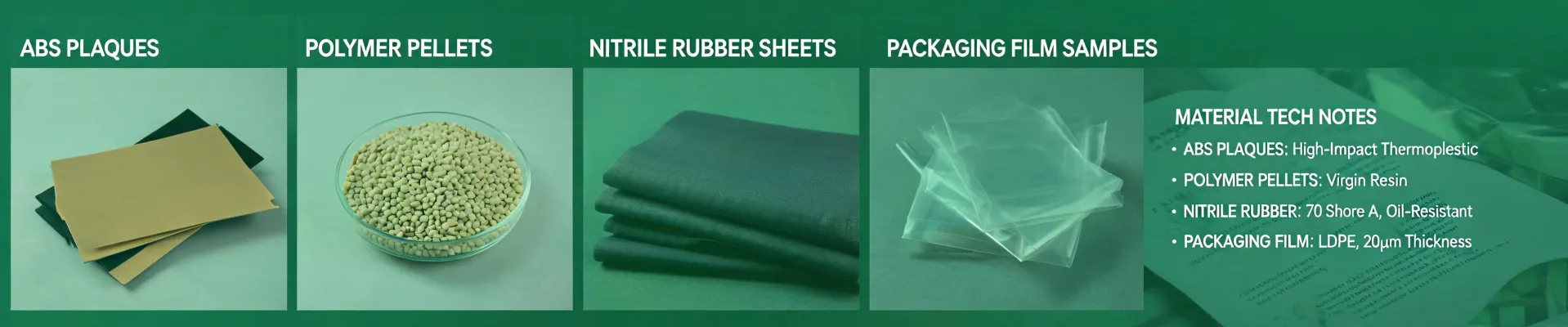
This is where things get specific. What is nitrile rubber? In the context of thermoplastic resins, we're usually talking about a blend—NBR/PVC, which combines the oil resistance of Nitrile Butadiene Rubber with the processability of PVC.
I learned this the hard way in Q2 2024. We had a client who needed cable jacketing for a robotic arm in a machine shop. The environment had constant exposure to cutting oils and hydraulic fluids. My first instinct was a high-end TPE marketed as "oil resistant." It was expensive, but the specs looked good on paper.
After 8 weeks in a field test, the TPE jacketing started to swell. The NBR/PVC blend we tested in parallel? No visible degradation after 12 weeks. The surprise wasn't the price difference (the NBR/PVC was actually 15% cheaper). The surprise was that the "premium" TPE was over-engineered for temperature range but under-engineered for chemical resistance.
My recommendation for Scenario B: If your cables will touch oils, fuels, or solvents, don't trust marketing labels. Get a sample of a nitrile-based compound (NBR/PVC) and test it.
But: Do not assume all nitrile rubber is the same. The ratio of NBR to PVC changes flexibility. A 70/30 blend (NBR/PVC) is great for flexibility and oil resistance. A 50/50 blend is stiffer but cheaper. Prescribe the ratio, not just the material name.
The key performance metric here is Volume Swell after immersion in IRM 901 oil. Industry standard for a good grade is less than 30% swell after 70 hours at 100°C. Any grade quoting higher than that is for gaskets, not dynamic cable applications.
Scenario C: High-Heat or Automotive Under-Hood (The Crosslinked & Copolymer Zone)
Now we're moving beyond standard thermoplastics. If your wire needs to sit near an engine block or in a hot attic space, standard PVC (rated for 60-80°C) will melt. You need something that can handle 105°C, 125°C, or even 150°C continuous.
This is where INEOS PP (polypropylene) copolymers or crosslinked polyethylene (XLPE) come in. These aren't your typical wiring materials; they're engineering materials. The cost jumps significantly—from $1-2/kg for PVC to $3-5/kg for a specialty PP copolymer with the right heat stabilizers.
I have mixed feelings about this shift. On one hand, the cost is daunting. On the other, I've seen a $0.50/meter cable fail and cause a $10,000 warranty claim on a machine tool. That calculation changes everything.
My recommendation for Scenario C: For high-heat environments, don't try to use a modified PVC. It won't last. Invest in a PP copolymer or a crosslinked material.
But: Here's the thing most people miss: Thinner insulation can offset the higher material cost. A PP copolymer can often be extruded at half the wall thickness of a PVC jacket while maintaining the same dielectric strength. So your cost per meter of covered wire might actually be comparable.
Reference: Standard wire insulation requirements (per UL 1581) require specific thickness for PVC. For a 105°C rated PP copolymer, you can often reduce wall thickness by 30-40%. That makes the TCO equation much more favorable.
How to Figure Out Which Scenario You're In
Here's a simple checklist I use before talking to any supplier:
- What is the operating temperature? >80°C continuous? You're in Scenario C. <105°C? You're in A or B.
- What is the chemical exposure? Oils, solvents, fuels? You're in Scenario B. Dry indoor air? You're in Scenario A.
- What is the production volume? Running 100,000+ meters a year? The speed of the line matters a lot. Running 1,000 meters a year? Material cost per kg is your dominant factor.
- What certifications are needed? UL VW-1 (flame test) is standard for PVC. VDE and automotive specs (like LV-112) often force you into a TPE, PP, or crosslinked material.
I wish I had a magic formula that tells you the exact perfect resin. I don't. But if you can answer those four questions, you can walk into a meeting with a materials engineer and speak their language. And that's how you avoid buying a premium material that doesn't fit, or a cheap material that fails.
This was accurate as of late 2024. The thermoplastic market moves fast, especially with developments in bioplastics and recycling. Always verify current prices and specific grade availability before placing an order.
Ask About This Topic