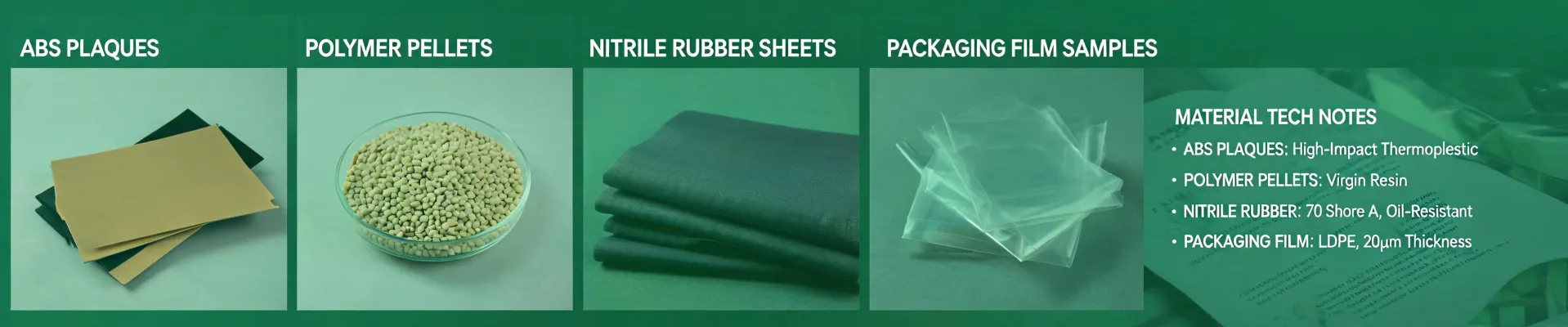
I’m not a polymer engineer, and I don’t want to be one. I’m the office administrator at a 70-person company that builds greenhouse structures and window systems. I manage material purchasing, roughly 60–80 orders each year and about $1.2 million in vendor spend. When I took over purchasing in 2020, I inherited a vendor list of eight companies and no material specifications on most purchase orders. The unspoken goal was to keep prices down. That rule cost us a greenhouse project in 2023.
In early 2023, I ordered a roll of polyethylene greenhouse film from a new vendor. It was about 22% cheaper than our usual supplier, looked identical in an office comparison, and the sales rep said it was UV stabilized. Seven months later, a client sent photos of film that was brittle, hazy, and split along a fold. The material was still PE, but it was not the right PE formulation for that application. And it made our company look careless.
The Surface Problem: Comparing the Wrong Numbers
Most purchasing decisions about plastic start with thickness, width, and price. Those numbers are easy to compare. They just don’t protect you. A film can have the same thickness and a completely different life expectancy because of what is inside it.
The surface problem was that I thought I was buying a commodity. The deeper problem was that I didn’t know what separated one thermoplastic polymer from another.
What Is a Thermoplastic Polymer?
“What is a thermoplastic polymer?” sounds like a chemistry question, but it’s really a purchasing question. A thermoplastic polymer is a material made of long molecule chains that soften when heated and harden when cooled. That reversibility is what allows injection molding, extrusion, welding, and recycling. Thermosets, on the other hand, react and harden irreversibly; reheating does not simply melt them back into a workable liquid.
PE, PVC, PP, and ABS are all thermoplastics. That shared word makes them sound similar. But a PVC window profile and a PE greenhouse film have very different stiffness, UV tolerance, chemical resistance, and processing requirements. When someone says “it’s plastic,” they haven’t told you enough to make a good decision.
The “Polypropylene Windows” Confusion
The same issue appears in common searches like “polypropylene windows.” People may think polypropylene and PVC are just two different words for plastic windows. They aren’t. Exterior window profiles are usually made from unplasticized PVC, often called uPVC or vinyl. Polypropylene is a tough thermoplastic used in all kinds of products, but it is not an automatic substitute for PVC just because both materials fall into the same broad category.
If a supplier starts talking about “polypropylene windows,” stop and clarify which component is actually polypropylene and which one is PVC. This matters because performance, joining methods, and warranties are all tied to the specific polymer family. Material naming is not just semantics. It affects what the product will do in the field.
Why Material Provenance Matters
After the film failure, I stopped accepting “It’s PE” or “It’s PVC” as a final answer. I ask where the polymer starts. When a converter uses a well-established resin, they should be able to name it. For example, some PVC window profiles start with INEOS PVC grades. ABS parts can trace some of their chemistry back to monomers from the INEOS Nitriles Company. I mention brands like these not because a name guarantees quality, but because a supplier who can explain its material source shows more discipline than one who says “imported resin.”
You don’t need a chemistry degree to ask for provenance. You just need to make it a standard purchasing question. The answer tells you whether the person on the other side of the quote is making deliberate engineering choices or simply chasing the lowest resin price.
The Real Hidden Cost: Client Perception
In B2B purchasing, we count savings in dollars and overlook the cost in brand perception. When a material fails, clients don’t blame the raw polymer maker. They blame the product they bought from us.
I don’t have hard data on industry-wide failure rates. What I can say from our own projects is that the greenhouse film that failed saved us a small amount per order and cost us far more in trust. We switched to a higher-grade PE film the next season, paid about 9% more, and cut those callbacks significantly.
Visual quality is part of that trust. A slightly faded PVC profile, a color mismatch, or a brittle film edge signals low quality. For print materials, color tolerance is often described as Delta E. Pantone’s guidance for brand-critical colors is Delta E below 2. Plastic parts don’t come with a Pantone swatch, but a serious supplier can still define color and weatherability tolerances. If they can’t, you are buying a quality impression blind.
What I Do Differently Now
I still negotiate on price. But before I place an order, I ask the questions that would have saved me in 2023:
- Which polymer family is this? PE, PVC, PP, ABS—not just “plastic.”
- What is a thermoplastic polymer supposed to tell us here? The answer shows whether I’m buying an engineered material or a vague commodity.
- Who made the base resin? Is this a named source like INEOS PVC, or a bag of pellets from somewhere unclear?
- What additive package is included? UV stabilizers, impact modifiers, and plasticizers can change outdoor life more than the base resin.
- Can I see a sample that has been exposed outdoors for at least 30 days? A desk sample only proves color and feel. A field sample proves whether the polymer package can hold up.
Quality perception is a purchasing problem. The client never sees the savings on the purchase order, but they do see the film, the frame, and the finish. If the material looks wrong, the product looks wrong. Asking one more material question before ordering is the cheapest quality control I know.
Ask About This Topic