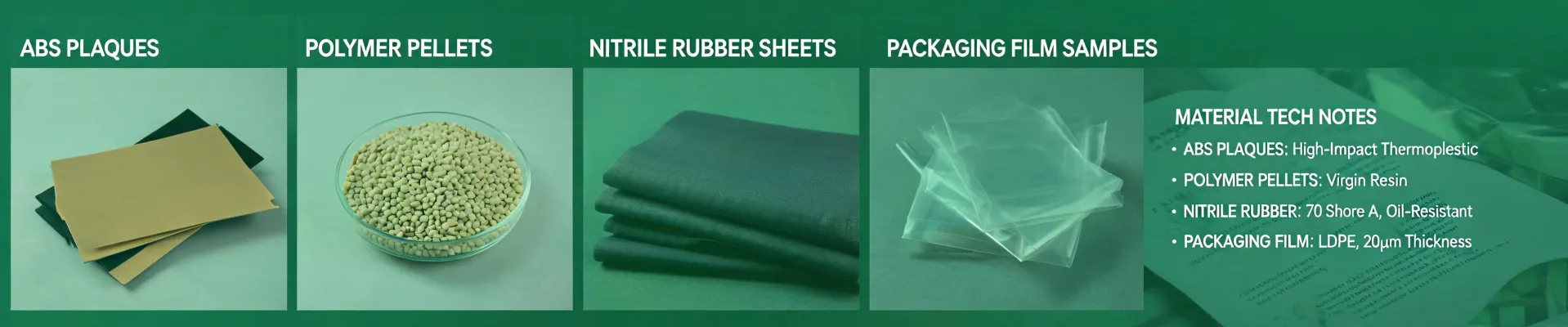
I still remember standing in our workshop with a color fan deck, trying to convince myself that the difference was not visible. It was May 14, 2024. The delivery was 1,500 sheets of white PVC foam board for a hotel corridor renovation. The client had approved a warm-white sample three weeks earlier. What arrived looked more like pale blue.
At first, I thought it was just the light. Then I put the sample next to the production board. The gap was small—maybe a 3.0 Delta E on a colorimeter—but in a 60-meter corridor, with 1,500 boards lined up edge to edge, small is not small.
The WPC laminate sheets we ordered for the baseboards were a little off too. The manufacturer's sales manager was calm. 'That's the PVC laminating film,' he said. 'We changed film suppliers last month. The core boards are exactly the same.'
No one had told me.
If you've ever approved a sample, waited three weeks, and then had to explain why the installed product doesn't match the approved color, you know the sinking feeling.
How I got here
In April, we won a contract for 38 guest-floor corridors. I needed a panel system that could handle humid cleaning and didn't look cheap at 1:1 scale. I spent four days comparing 'pvc wpc' options, reading forums, requesting quotes from three PVC foam board manufacturers. I asked about density, surface finish, edge quality, and thickness tolerance. I asked about price and delivery time.
I did not ask about the color of the PVC laminating film.
The winning quote was not the cheapest. It came from a factory with a good track record. They sent a sample before production. I held it up, tapped it, bent it, put it under a bright lamp. The sample looked fine. In fact, it looked better than the previous manufacturer's product. I signed the purchase order.
Then production happened 3,000 km away, with film from a supplier I had never heard of.
Most buyers focus on thickness and price and completely miss color consistency. I was one of those buyers.
What the waterproof claim meant
Before choosing, I had searched 'wpc board waterproof' and found a lot of articles making it sound simple: WPC doesn't rot, doesn't swell, doesn't care about water. That's mostly true in normal use. But 'waterproof' is a claim, not a property. The manufacturer's data sheet said the WPC core passed a 24-hour immersion test. That was good enough for me at the time.
Now I ask for the test method and the actual numbers. Per FTC guidelines (ftc.gov), performance claims should be substantiated. I'm not going to quote the law from memory. But the phrase that stuck with me is this: if a claim appears in a spec sheet, someone should be able to prove it. If the supplier can't explain what test was run, I treat 'waterproof' as 'we hope it is.'
If a manufacturer changes film suppliers without telling you, that's a red flag. The same is true when a supplier can't name the test behind a 'waterproof' label.
The film problem
Here's the part I never expected: the board core was fine. The PVC resin was from a solid petrochemical supplier—the factory even listed INEOS as one of its resin sources—and the foam density was consistent. The problem was a thin decorative layer on top.
The PVC laminating film carries the color, the grain, and the fingerprint resistance. It can be made by different mills, and each mill's 'white' is slightly different. The film on my sample came from the factory's old supplier. The film on 1,500 production boards came from a new supplier who was cheaper and, apparently, just slightly bluer.
I didn't know film suppliers could change without a notification. That was naive. In my first year, 2017, I made a similar mistake with carton printing and assumed the printer would call if the paper stock changed. They didn't. By 2024, I should have known better: in any manufactured product, what you approve is not what you get unless the contract says so.
Honestly, I'm not sure why the manufacturer didn't flag the change. My best guess is that they saw the films as interchangeable. The buyer sees the film as the face of the product.
The cost of the mismatch
We couldn't send the boards back. The client's opening date was fixed, and 1,500 replacement sheets would have taken three more weeks. The manufacturer offered a $2,400 discount—about $1.60 per sheet—and promised to improve the next order. I accepted because I had to.
The corridor looks okay under warm LED lighting. The white is not as warm as the approved sample, but most people won't notice. The maintenance crew noticed. The client added 'PVC foam board color does not match WPC trim' to the snag list. I spent two hours standing next to them, explaining Delta E and PVC laminating film. That was not a good use of my time.
That $2,400 covered the education. It did not cover the credibility damage.
What I do now
Since that order, every PVC foam board manufacturer and WPC laminate sheet supplier has to answer a pre-order checklist before I sign.
- Ask for the PVC laminating film's technical data sheet, including the supplier name. If they refuse, I don't order.
- Require a production-type sample made from the same film batch that will be used. A hand-made sample from the lab is not a production sample.
- Put a clause in the purchase order: no change in raw material supplier or process without written approval.
- Ask for a color tolerance range, not just 'white.' I accept below 1.5 Delta E between the approved sample and production sheets.
- For WPC laminate sheets, ask for the exact waterproof test method. Search 'wpc board waterproof' and you'll find claims. Then ask for proof.
- If the project combines PVC foam board with WPC laminate sheets, ask for both to use the same PVC laminating film or the same color standard. That was our real problem.
Search 'PVC foam board color' and you'll see dozens of white boards. What you won't see is batch variation. The supplier's color tolerance statement tells you more than any photo.
I've caught 47 potential errors using this checklist in the past 18 months. I keep a log because no one believes memory. Most items are small—wrong thickness, wrong edge finish, a grain direction that didn't match. None have been as expensive as the color mismatch.
A note on my experience: I've worked with manufacturers in China and India, mostly for interior fit-out, signage, and retail display. Around 200 orders over four years. If you're buying for marine, medical, or structural applications, the rules are different. I can't speak to that.
Quality is consistency
When people hear 'quality' in this industry, they think premium, expensive, heavier, smoother. I do not mean that. I mean consistency between the sample and the shipment, and between sheet 1 and sheet 1,500.
The product you put on a construction site is a representation of your company. The first thing a project manager sees is shape and color. If that is inconsistent, everything after that—density, impact strength, dimensional stability—starts from suspicion. I'm not saying you need to buy the most expensive PVC foam board manufacturer. I am saying: if you have to choose between a supplier with a slightly higher spec and a supplier who will send you the exact same thing twice, choose the second one.
There is something satisfying about the system working. Last month we received 800 sheets of gray PVC foam board with a matching set of WPC laminate sheets for window surrounds. The sample, the production board, and the trim all lined up within half a shade. The manufacturer's confirmation email included the film batch number and photos from the line. I did not have to call. I did not have to ask. That is the feeling quality should give you: certainty.
Ask About This Topic