INEOS is one of the largest chemical producers in the world, but for industrial buyers, the brand name matters less than this: the right polymer grade, specified and verified carefully, will cost less over your product’s lifetime than any “cheap” alternative. That’s not a slogan. That’s a pattern I’ve watched repeat itself from both sides of the QC table.
I’m a quality and brand compliance manager at a plastic products manufacturer. I review every inbound polymer delivery before it reaches production — roughly 200 items a year — and I’ve rejected 12% of first-time deliveries in 2024 due to off-spec properties. The pattern I keep seeing? Buyers who focus on unit price over total cost of ownership get burned more often than not.
Why I’m Confident This Isn’t Just an Opinion
The failures I deal with almost never trace back to dishonest suppliers. They trace back to incomplete specifications. We’ll receive “HDPE” when the application needed a specific HDPE grade with a defined melt flow index, or “acrylic” when the part needed a UV-stabilized grade rather than general-purpose. The material name is not the material spec.
The March 2023 incident changed how I think about this. We ordered a standard INEOS HDPE grade for an outdoor plank project. What arrived was technically HDPE — but a lower-density blow-molding grade than our profile extrusion spec required. The planks were installed in late spring. By August, three had warped visibly in the sun. The rework cost us a $22,000 redo and delayed launch by six weeks. The cheaper resin was maybe $0.03 per pound less than the correct grade. I should add that the supplier was following our PO to the letter. We hadn’t specified the grade clearly enough. (Not that I was eager to admit that in the postmortem.)
In my first year, I made the classic beginner error: assuming “HDPE” was one material. I used a general-purpose grade for an application needing UV stabilization, and we saw surface cracking before the first season ended. The supplier’s documentation clearly stated “for indoor use only” — I just hadn’t read past the spec table. My fault. My lesson.
The INEOS Portfolio: What I Actually Check
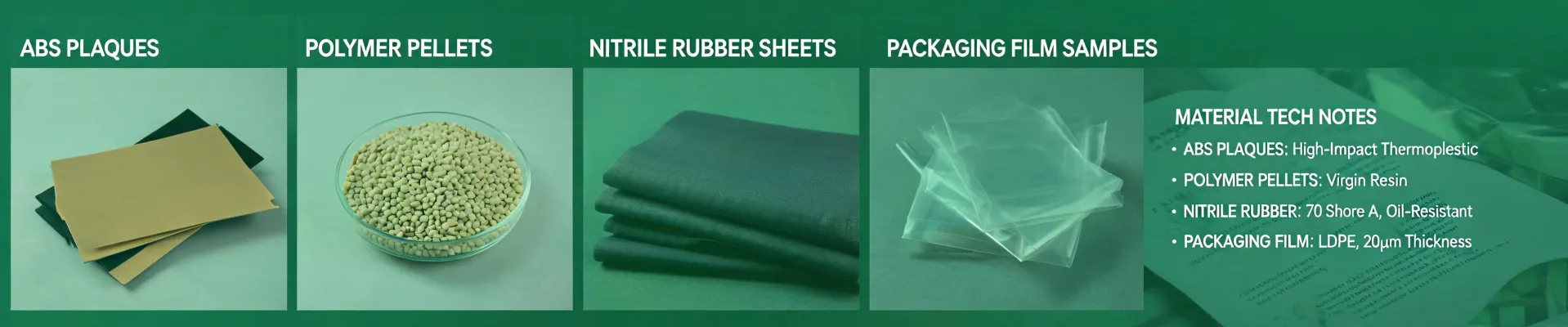
INEOS operates across the polymer value chain: olefins, polyethylene (PE), polypropylene (PP), polyvinyl chloride (PVC), acrylonitrile-butadiene-styrene (ABS), acrylics, nitrile rubber, EPDM, polyurethane, and epoxy resins. For industrial buyers, that breadth matters. You can source multiple materials from one supplier and get technical support that understands how they behave together. But breadth also means you need to be precise about which product line and grade you actually need.
INEOS Acrylic: More Than a Pretty Sheet
Acrylic is often positioned as a glass alternative, and it is — but the quality tolerances are tighter than most buyers realize. When we inspect INEOS acrylic components, three measurements decide pass or fail:
- Optical clarity: light transmission should exceed 92% for clear cast grades. If it’s lower, the sheet has weathering or pigment-system issues.
- UV stability: non-stabilized acrylic will yellow and craze outdoors. A spec that doesn’t mention UV stabilization almost certainly lacks it.
- Dimensional consistency: thickness variation across a sheet causes molding defects downstream that are expensive to chase.
Color matching is its own discipline. When a client specifies a Pantone brand color for acrylic parts, we verify with a spectrophotometer. The industry tolerance for brand-critical colors is a Delta E below 2 — anything above 4 is visible to most people. Achieving that requires consistent pigment masterbatch, not luck. (Which, honestly, is where a quality inspector earns their keep.)
HDPE Planks: Where Grade Selection Is Everything
HDPE planks are used everywhere — marine docks, outdoor furniture, playgrounds, agricultural buildings — because they don’t rot, splinter, or need painting after installation. But “HDPE” is not a specification. Here’s what I check on every plank delivery:
- Density: HDPE ranges from 0.941 to 0.965 g/cm³. Drop below that, and you’re in medium-density territory with noticeably less rigidity.
- Melt flow index (MFI): for profile extrusion, an MFI of 0.2–2.0 g/10 min usually works. Too high, and the plank sags during extrusion; too low, and surface quality suffers.
- UV protection: unprotected HDPE degrades in 1–2 years of direct sun. Quality planks include 2–2.5% carbon black or a proper HALS package.
Story time: we received a “same spec” HDPE plank from a converter who sourced resin on price alone. Density checked out at 0.943 g/cm³ — technically HDPE, just barely — but the planks delaminated at the ends within six months. Turned out the converter had blended two different INEOS HDPE grades to save cost, and the melt-flow mismatch created internal stress lines nobody caught at incoming inspection. We rejected the next delivery and switched to a converter who traced every batch to a certified grade. The cost went up 8%. The field failure rate went from 9% to 0.3%. I know which one I prefer.
Nitrile Rubber: Respect the Formulation, Not Just the Name
Nitrile (NBR) is the standard for oil and fuel resistance — automotive hoses, fuel lines, gaskets, seals. But the name alone tells you almost nothing about performance.
Acrylonitrile (ACN) content drives the properties: higher ACN means better oil resistance and worse low-temperature flexibility. A nitrile seal that performs beautifully at 25°C can go brittle at −20°C if the ACN level is too high for the application. Quality inspectors check durometer, tensile strength, and compression set — but only if you’ve specified the NBR grade and the performance standard upfront. Write “nitrile” on your drawing, and you get whatever the converter has in the warehouse that day.
Is Plastic Biodegradable? The Honest Answer
This is the question I get more than any other, and the honest answer surprises most people: most commodity plastics — PE, PP, PVC, ABS — are not biodegradable in any meaningful timeframe. They don’t “go away” in a landfill; they stay as plastic.
Biodegradable plastics exist — PLA, PHA, PBAT — but they require specific conditions: industrial composting at 55–60°C, controlled humidity, active microbial presence. In ordinary landfill or marine conditions, they behave much like conventional plastic. The label “biodegradable” without qualification is, at best, optimistic marketing.
Per FTC Green Guides (ftc.gov), environmental claims like “recyclable” or “biodegradable” have to be substantiated. For a recyclable claim, the FTC expects that at least 60% of consumers in your market have access to facilities that actually accept the material. If a product claims biodegradability but only breaks down in an industrial composting facility your customers can’t reach, that’s legally risky and analytically dishonest.
Here’s the counterintuitive part I wish more procurement teams understood: for long-lived products, durability is sustainability. An HDPE plank that lasts 25 years without painting, rot, or replacement is greener than a “biodegradable” plank that fails in 5 years and gets replaced 5 times. Every replacement means new material, new energy, new shipping, more waste. The most sustainable plastic is often the one you buy once and never think about again.
When Biodegradable Actually Makes Sense
There are cases where biodegradable polymers are the right call: single-use food service items, agricultural film you can plow into the soil, certain medical disposables. In those applications, compostable materials meaningfully reduce waste. But specifying biodegradable plastic for a structural outdoor product is a category error — you’re paying extra for a property that actively shortens your product’s useful life.
I’ll also put a warning on “oxo-degradable” plastics. Those use additives to fragment the material into tiny pieces. The fragments don’t disappear; they become microplastics. That’s not degradation, it’s invisibility. Avoid the category entirely.
Boundary Conditions Worth Acknowledging
I’m not saying “always buy the premium grade.” That would be lazy advice. I’m saying: match the material to the application, verify what your converter actually uses, and build at least one verification point into your workflow. A 20-minute melt-flow test on every incoming polymer batch has saved us far more than it costs.
We didn’t have a formal batch-verification process until 2022 (which, honestly, was embarrassing for a company of our size). We lost money on three separate quality incidents before I got approval to build it. Should have done it after the first.
Also worth saying: INEOS polymer products aren’t automatically right for every job. Need high-temperature fluid resistance? Nitrile won’t beat a fluoropolymer. Need glass-like impact strength? Acrylic might lose to polycarbonate. The advantage of a broad portfolio is that you can find the right material and the technical support in one place — but only if you arrive with a clear specification and specific questions, rather than “give me something plastic.”
The $22,000 lesson in 2023 wasn’t caused by cheap material. It was caused by assuming a material name was a specification. It isn’t. Polymer science rewards precision. And the details you skip in the spec are exactly the ones that will come back as field failures.
Ask About This Topic