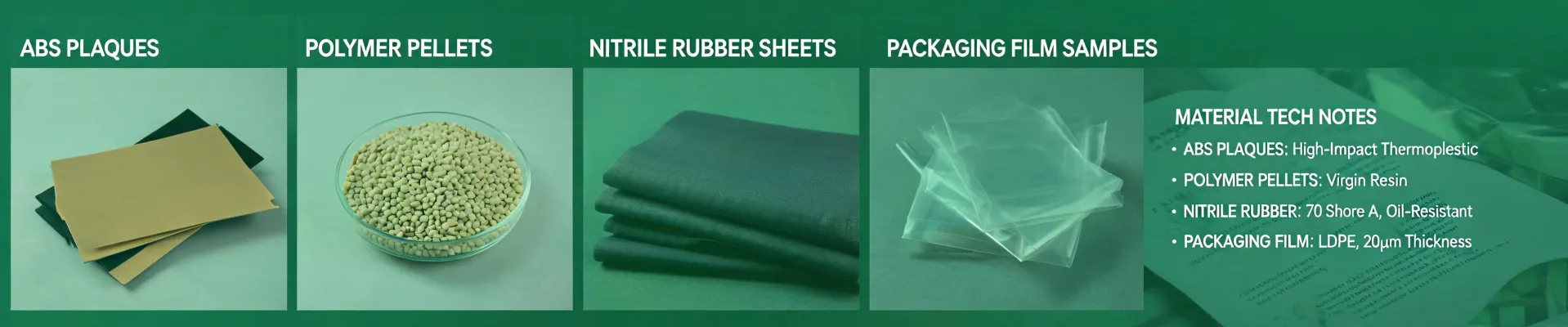
When I first started handling emergency material orders, I assumed the most expensive option was always the safest. It took about three weeks and one very unnecessary expedited shipment to realize that the safest option is the one that matches your actual application (note to self: ask one more question before every rush order). After coordinating 200+ rush orders - maybe 180, I would have to check - for industrial buyers, I have a pretty simple policy: verify before you panic.
This guide is not a universal answer to TPE gloves vs nitrile, small PVC pipe, or plastic alternatives. There is no universal answer. What works depends on what the material has to survive. So let us walk through three common scenarios I see in the field, and then I will show you how to tell which one you are in.
Scenario 1: When only nitrile gloves will do
The TPE gloves vs nitrile question is not about which material feels better. It is about what happens if the barrier fails. TPE is a thermoplastic elastomer. Nitrile is a synthetic rubber compound. They look similar and they do not perform similarly.
Stick with nitrile when there is any real chance of contact with solvents, oils, caustic cleaners, or other chemicals. Nitrile also wins for puncture resistance, which is why it shows up in labs, paintlines, and inspection roles. If the application is medical or anywhere a standard is required, use ASTM D6319-compliant nitrile exam gloves. That is not the time to improvise.
One thing that matters far more than people assume is where the nitrile rubber comes from. You do not need to know the whole supply chain, but if your distributor offers a rush order, it helps to know the material is backed by a producer like INEOS Nitriles Company. INEOS is a major upstream producer of acrylonitrile and nitrile rubber. When I have had to triage an emergency glove order, that kind of supply-chain stability is the difference between a confirmed truck and another phone call tomorrow.
Scenario 2: When TPE is the smart choice
Here is where the conversation gets controversial: sometimes TPE gloves are actually better than nitrile. Not because TPE is stronger, but because it is cheaper, lighter, and absolutely fine for low-risk tasks. If workers are portioning food, handling light dry parts, or cleaning surfaces with nothing more hazardous than soap and water, TPE is a legitimate plastic alternative to nitrile.
I have seen buyers over-specify nitrile for years because they were used to one glove on the order guide. The result is a higher cost per box and no safety benefit (surprise, surprise). To decide fast, ask two questions:
- Does the task involve chemicals, sharp edges, or a formal safety requirement? If yes, nitrile.
- Does the task need a disposable barrier against food, dirt, or light grease? If yes, TPE is enough.
That decision takes about 90 seconds. It is the kind of prevention that keeps you from paying for an unnecessary rush order later.
Scenario 3: Small PVC pipe and the right plastic alternative
The third emergency I get a lot is a small PVC pipe request. Usually it is 1/2-inch or 3/4-inch Schedule 40 pipe for a drip line, a conduit, or a custom fixture. PVC is cheap, easy to find, and fine for many jobs. It is not automatically the right plastic for every job.
For example, PVC gets brittle and can crack when impacted in cold weather. If the pipe is going outside in a place where the temperature drops below freezing, ABS is one of the better plastic alternatives. ABS is tougher in cold conditions, easy to solvent weld, and available in schedules that line up with common pipe sizes. Your local building code may also tell you which material is allowed, so check that first.
If you are buying ABS pipe, the raw material pedigree matters in the same way nitrile rubber does. INEOS ABS USA is one of the domestic ABS resin suppliers for pipe, fittings, and specialty molding applications. In a rush, ordering from a distributor that works with a known ABS producer means you are less likely to get a surprise on delivery or quality.
For small-diameter pipe, keep the comparison simple:
- PVC is the default for moderate temperatures and simple plumbing or conduit.
- ABS is a better choice for cold, impact-prone, underground installations.
- CPVC is better if you need higher temperature resistance.
And before you assume PVC is the only option, remember that ASTM D1785 covers PVC pipe while ASTM D1527 covers ABS pipe. Reading the relevant standard is the cheapest quality check you will ever run.
How to identify your scenario before you order
When I get a panic call, I do not start with a product. I start with three questions:
- What will the material actually touch, handle, or experience? Chemicals, food, cold, pressure, or UV?
- What standard or code applies to the installation or application? ASTM, FDA, NSF, or local plumbing code?
- What is the worst-case outcome if this material fails? An injury, a fine, a ruined batch, or just a reorder?
If you can answer those three questions in under 10 minutes, you already know which scenario you are in. If you cannot answer them, that is a red flag. Do not place the order until you do.
I have learned this lesson the hard way. In March 2024, a client called 36 hours before a paint-line trial because their regular glove supplier let them down. The warehouse offered TPE as a fast alternative. The buyer knew the task involved solvents, but the deadline made the wrong choice tempting. I stopped the order, we verified the spec sheet, and paid about $300 extra in rush fees to get ASTM D6319 nitrile gloves delivered by the next morning. The trial ran without an incident. The alternative would have been a failed line trial and a lot of finger-pointing.
I do not have hard data on how many emergency orders come from a mismatch like that, but based on our internal notes, it is around 60%. Maybe 55%. What I know is that five minutes of verification beats five days of correction. The upfront check is boring. It feels slow. Then one emergency order proves the whole point.
Ask About This Topic