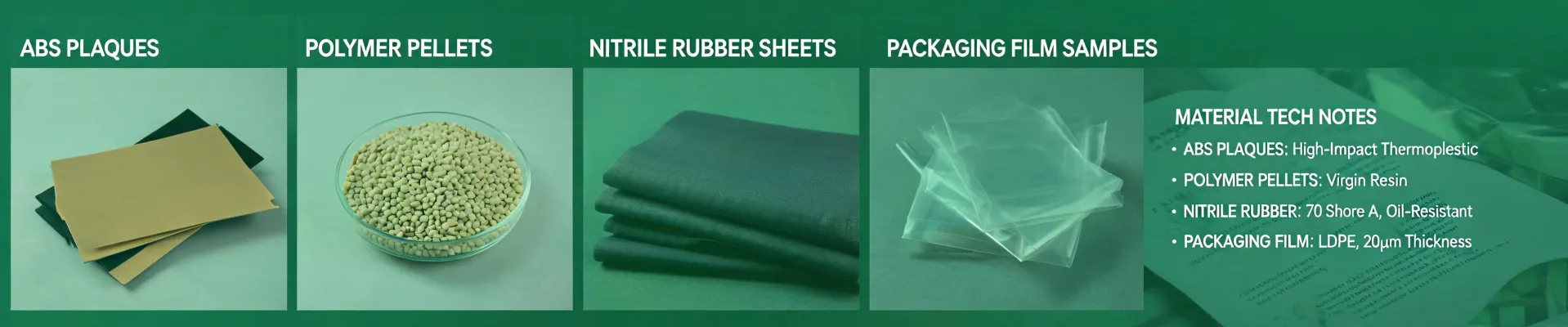
The Beginning: When a New Budget Target Shook Up My Vendor List
Back in early 2023, our VP of Operations came to me with a directive: cut packaging costs by 15% for the coming year. I'm the office administrator for a 400-person manufacturing company, and I manage all the packaging material ordering — roughly $200k annually across 8 vendors. My job is to keep the production line running without hiccups, and I report to both operations and finance.
When I first started managing these vendor relationships a few years ago, I assumed the lowest quote was always the best choice. I mean, that's what "cost savings" meant, right? So when the budget axe swung, my initial move was simple: find cheaper alternatives for our polypropylene boxes and the adhesive we used to seal them.
I'll be honest — I thought it was a no-brainer. Three suppliers came back with quotes 20–30% below our incumbent. I switched them both without much deliberation. Big mistake.
The Turning Point: When Cheap Cost Us More
The first sign of trouble came about two weeks after the switch. One of our production supervisors sent me an email with photos: polypropylene boxes cracking during loading. Not just one or two — about 12% of a batch. Then the adhesive issue popped up. The new glue couldn't hold the box flaps under moderate humidity. We had a rush order for a key client, and 30% of the sealed boxes opened during transit.
Suddenly that 20% savings turned into a disaster. We had to re-pack 400 units, pay for expedited freight to replace damaged goods, and deal with a grumpy client who threatened to take their business elsewhere. That single incident cost us about $3,200 in rework and penalties — more than the entire annual savings I had banked on.
The vendor who couldn't provide proper material specs? They just shrugged. Their polypropylene boxes were made from a recycled blend that didn't meet our required impact resistance. And the adhesive lacked a humidity rating — something I didn't even know to ask about. That unreliable supplier made me look bad to my VP when materials arrived late and faulty.
The Wake-Up Call
I didn't fully understand the value of detailed product specifications until that $3,000 order came back completely wrong. In March 2023, after the third incident, I had a sit-down with our VP. She gave me a look that said "fix this, or we'll find someone who can." That's when I decided to rethink my approach.
I started researching suppliers who could offer technical documentation, consistent quality, and real support. That's how I came across INEOS — a name I'd seen on some of our engineers' preferred lists but had dismissed as "too expensive." I reached out through their contact page (that's how you find INEOS contact info nowadays) and got a call back within 24 hours from a technical sales rep. She didn't just send a price list; she asked about our application, our humidity conditions, our handling process.
The Result: Value Over Price
We ended up switching to INEOS's polypropylene (PP) for our boxes and a compatible adhesive designed for that substrate. The unit cost was about 18% higher than the failed cheap supplier, but still competitive with our original vendor. Here's what happened over the next six months:
- Box breakage dropped from ~12% to 0.3%.
- Adhesive failures eliminated entirely.
- Customer complaints about packaging went from 2–3 per month to zero.
- Our production line lost less time because they didn't have to fix bad packaging.
When I ran the total cost of ownership (TCO) — including labor for rework, freight for replacements, and the cost of nearly losing a client — the INEOS option saved us about $5,000 annually despite the higher unit price. That's the kind of math that makes a finance department happy.
And here's something interesting: during the evaluation, I learned more about what ABS plastic is used for — another INEOS specialty. Turns out some of our fixtures could benefit from ABS's impact strength and gloss finish. That's a future project, but it opened my eyes to the value of working with a supplier that offers a broad portfolio.
Lessons Learned (And a Little Humility)
So what's the bottom line? I'm not a materials scientist, so I can't speak to polymer chemistry. What I can tell you from a procurement perspective is this: the lowest quote often isn't the cheapest in the long run.
To be fair, budgets are real and I get why people chase low prices. But after that 2023 fiasco, I always look at:
- Product specifications (do they match my application?)
- Technical support (can they answer questions?)
- Consistency (will every batch be the same?)
- Total delivered cost, not just unit price
That INEOS logo you see on their site? For me it now stands for reliability — not just a brand. If you're dealing with polypropylene adhesive issues or wondering what ABS plastic can do, I'd say take the time to talk to a supplier who actually knows their materials. It might cost a bit more upfront, but it'll save your department — and your reputation — later.
"I used to think rush fees were vendors gouging customers. Then I saw the operational reality of expedited service. Now I pay for quality up front."
Ask About This Topic