The Short Answer
If you're evaluating Amcor for rigid plastic packaging, here's what I'd tell a colleague over coffee: the product quality is reliable, but your experience will hinge on which facility handles your account—and the Amcor Rigid Plastics Fairfield and Allentown locations are not interchangeable. That distinction matters more than any brand brochure or sales deck.
I'm the office administrator for a 180-person manufacturing company in the Midwest. I manage roughly $340,000 annually across packaging, office supplies, and facilities vendors. That's not glamorous procurement, but it's real buying—the kind where you have to balance quality, invoice compliance, and whether your operations manager will yell at you if production stops.
When we needed printed plastic bags and rigid containers for a product launch in 2023, Amcor landed on our shortlist alongside two regional suppliers. Here's what I actually learned—not the polished version.
Why You Might (Or Might Not) Trust This Perspective
I've been doing this since 2019. That's roughly 200 purchase orders with packaging vendors—some closing without incident, some going sideways in ways that made me look bad in front of my VP.
In our 2024 vendor consolidation project, I processed 73 orders across 11 vendors. So I've seen how these relationships play out over time, not just on a single happy-path order.
What I'm not: a plastics engineer, a Fortune 500 strategic sourcing specialist, or someone who negotiates million-dollar contracts. My context is domestic, mid-volume, and operationally driven. If you're sourcing internationally or placing orders with six figures attached, your calculus will be different.
Here's a counterintuitive thing I've learned: most buyers assume big brands guarantee consistency. Actually, it's closer to the reverse—big brands have more facilities, which means more variation. The causation runs opposite to what people expect. You don't pick a large supplier because every facility is identical. You pick one because they have a facility that happens to be good for your specific need.
What Actually Matters When Sourcing from Amcor
Fairfield and Allentown are separate operations
When I first looked at Amcor, I assumed "Amcor Rigid Plastics" operated as one seamless unit. It doesn't. The Fairfield facility and the Allentown facility have different capabilities, lead times, and—based on conversations with two other buyers in my network—different responsiveness levels.
Fairfield handled our initial quote and sample run. Allentown handled the follow-up production order after we expanded to printed plastic bags. Same parent company. Noticeably different experience. Not catastrophic—but enough that I now ask "which facility will actually run this PO?" before signing anything.
The takeaway: treat Amcor Rigid Plastics Fairfield and Amcor Rigid Plastics Allentown as separate vendors until you have reason to believe otherwise. Get the facility name in writing. Confirm it appears on the invoice. This isn't paranoia—it's how you avoid the "that's not our site" conversation at 4:30 on a Friday when your shipment is missing.
The printed plastic bags held up better than I expected
We ordered 3,000 printed plastic bags for a trade show in Q2 2023. Print quality was solid—no smudging, no color drift between the proof and the production run. That's not guaranteed with every supplier (I've seen color drift so bad that our brand blue looked purple, which is a whole conversation when you're trying to look professional).
This is where the "quality is brand image" argument stops being abstract. When someone picks up one of your printed plastic bags, that's a physical first impression. If the print is blurry or the color is off, you've already lost a small amount of credibility—before you've said a word. The $40-per-1,000 difference between budget and premium printing shows up directly in how your brand reads.
Not saying Amcor is the only option that gets this right. But they got it right for us, on a deadline that I'd negotiated down to a frankly uncomfortable margin (thankfully, it held).
Material questions I had to figure out myself
Nobody at Amcor walked me through what PET, polypropylene, and polyethylene actually mean for my use case. I've never sourced "resin" or "polyethylene" in my life before this. I had to learn on my own—mostly by asking vendors dumb questions and reading spec sheets twice.
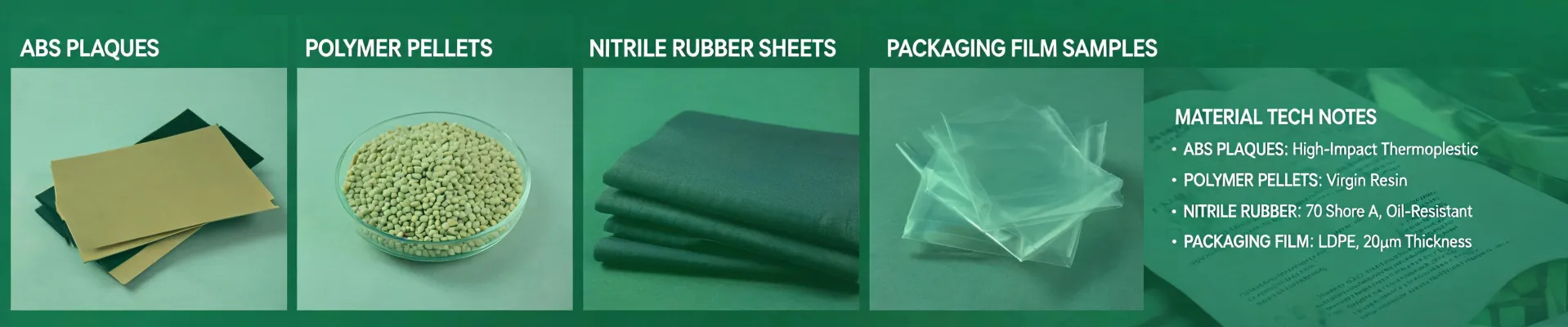
Quick version from someone who isn't a chemist: PET is clear and rigid (think beverage bottles). Polypropylene is more flexible and heat-resistant (good for containers that might sit in a warm warehouse). Polyethylene is the workhorse for bags and flexible packaging.
If you need to repair or seal any of these—or if you're dealing with nylon plastic components in your packaging setup—the best glue for nylon plastic is usually a two-part epoxy or a dedicated plastic adhesive, not standard superglue. That's a lesson I learned after watching a colleague try to patch a sample container with the wrong adhesive and ruin it (ugh). We now keep a small kit of packaging adhesives in the supply closet. Small thing. Saves a headache.
The Boundary Conditions
This worked for us because we're a mid-size domestic company with predictable ordering patterns and a four-to-six-week lead time. My experience is based on about 200 orders, mostly in the 1,000-to-5,000 unit range. If you're a seasonal business with demand spikes, or you're dealing with international logistics, the calculus might be different.
I've only tested Amcor on rigid containers and printed bags. I can't speak to their resin or industrial packaging lines—that's outside my scope.
One more thing worth flagging: environmental claims. Per FTC Green Guides (16 CFR Part 260), "recyclable" labels need to meet specific access thresholds—roughly 60% of consumers in the area where the product is sold. Amcor publishes a sustainability report, which is a good sign, but I still verify what "recyclable" means for our specific product in our specific region. A marketing PDF shouldn't do your due diligence for you.
And a small victory: so glad I checked the invoicing setup before our first big order with a different vendor. Almost went with a supplier that couldn't provide itemized billing—would've been a mess at quarter close. Amcor's invoicing, for what it's worth, was clean. Not exciting. But exactly what I needed.
Ask About This Topic