-
What are resin materials, and how do I pick the right one?
-
Acrylic vs resin — which should I specify?
-
What actually works for gluing HDPE?
-
Why do rush orders fail, and what did we change because of it?
-
How fast is “fast,” realistically?
-
Do I need the JSP app to order?
-
What's the one check that prevents most emergencies?
-
My deadline is already blown. Now what?
Yes — there's a Java framework with the same name. If you landed here looking for JavaServer Pages, this isn't that article, and I'm sorry for the wasted click.
If you're here because you need resin materials, a replacement HDPE part, or an answer to why nothing sticks to that one plastic, you're in the right place. I handle expedited orders and materials support at JSP. Nine years, more than 300 rush jobs — molded replacement parts, resin stock, machined components — including same-day turnarounds for automotive and food-processing clients. These are the questions I actually get asked, answered the way I'd answer them on the phone at 8 a.m. on a Tuesday.
One bias up front: I'm a prevention guy. Almost every emergency I've triaged was, twenty-four hours earlier, one small unchecked detail.
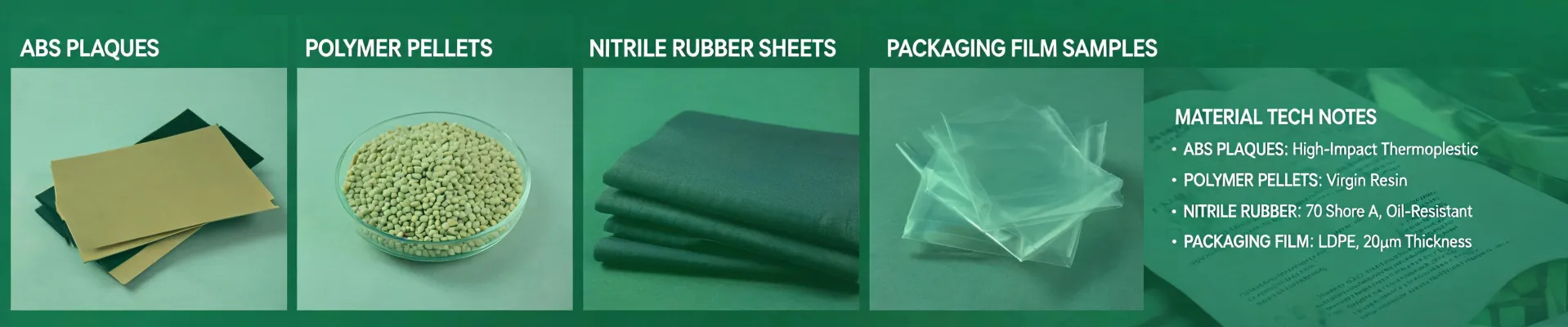
What are resin materials, and how do I pick the right one?
“Resin” is a category, not a specification. That's the first thing to get straight, because half the sourcing problems I see start with someone ordering “resin” and hoping.
The split that matters: thermoplastics (polyethylene, polypropylene, ABS, polycarbonate, acrylic) melt and can be re-formed; thermosets (epoxy, polyurethane, phenolic) cure once and don't. Beyond that, the right question isn't “which resin is best” — it's what the part has to survive. Load, heat, chemical exposure, UV, impact, clarity, and how it gets joined.
Practical version: need chemical resistance at low cost? HDPE or PP. Need impact? Polycarbonate. Clarity and scratch resistance? Acrylic. Need something cast into a shape at low volume? A cast polyurethane or epoxy.
Then read the data sheet, not the family name. Two resins from the same family can differ by 30% in impact strength depending on grade and filler. The numbers I look at first: tensile per ASTM D638, notched impact per ASTM D256, flammability to UL 94, and heat deflection temperature.
Acrylic vs resin — which should I specify?
Honest answer: it's not a fair comparison, because you're matching one specific material against a whole category. But assuming “resin” means cast polyurethane or polyester — the stuff used for signage, prototypes, and low-volume parts — here's the short version.
Acrylic (PMMA) wins on optics and surface. Light transmission around 92%, good UV stability, polishes to a clean edge, and it resists scratching better than most cast resins. It's also brittle — notched impact sits around 0.3 to 0.4 ft-lb/in, so a sharp hit or a point load is a real risk.
Cast resin wins on economics at low volume, deep pigmentation, thick sections, and impact tolerance. It also lets you cast around inserts in ways acrylic won't.
I watched a client swap cast resin for acrylic on a lobby sign and love the clarity — then crack it during install because someone over-tightened a standoff. Acrylic doesn't forgive point loads.
If impact is the actual driver, neither one is your answer. That's polycarbonate, which carries roughly 30 times the notched impact of acrylic. And if color is brand-critical, hold the spec to a physical standard — a Delta E under 2 is the usual tolerance for colors people will notice.
What actually works for gluing HDPE?
Not the stuff on the hardware store shelf, and I wish more people found that out before they ruined a part. (Yes, that includes the ones with “industrial strength” on the label.)
HDPE has a surface energy around 30–31 dynes/cm. Adhesives generally need a substrate above roughly 38 to wet out properly. So the glue isn't failing — the interface is. You can put the strongest epoxy in the world on HDPE and it'll peel off like a sticker, because there's nothing for it to grab.
Three things work, in order of how often I recommend them:
Mechanical fastening. Screws, bolts, or a redesigned joint. Boring, reliable, and it doesn't care about surface energy.
Welding. HDPE welds beautifully — hot plate, ultrasonic, spin. If the joint has to be permanent and load-bearing, this is usually the right call, and it's why a lot of glue questions should really be “can this be molded as one piece” questions.
Surface treatment plus a specialty adhesive. Flame, corona, or plasma treatment raises the surface energy enough for a two-part acrylic structural adhesive formulated for low-surface-energy plastics — the DP8010 or Loctite 3038 class. Clean first, treat, bond inside the open window, cure per the data sheet. Test on scrap before you commit a production run.
If a supplier tells you to “just use epoxy,” ask what surface prep they're using. If the answer is none, walk away.
Why do rush orders fail, and what did we change because of it?
When I started doing this, I assumed rush orders were about speed. They're not. They're about certainty. Speed is what the customer asks for; certainty is what they're actually buying.
Almost every expedited order that goes sideways fails for one of three reasons: the drawing revision doesn't match what's on the floor, the resin grade gets substituted without sign-off, or a color gets approved off a monitor.
In 2019 I released a job against a revision that had been superseded by a single letter. Three hundred machined parts, about $4,800 in material and machine time, all wrong in a way nobody could see until assembly. Nobody was careless. Nobody checked.
So we built a five-line release check. Expedited first-pass acceptance has held around 96% over the last eighteen months, against roughly 78% for rush orders that arrive without a confirmed revision and a physical color standard. Same shop, same machines. The difference is whether the information was settled before the spindle started.
How fast is “fast,” realistically?
First, a piece of insider knowledge worth having: “standard turnaround” usually includes buffer for the production queue, not for your part. It's a scheduling number, not a manufacturing number. That's why an expedite fee sometimes moves a job by two weeks and sometimes by two hours.
Ballpark, from our own order log: stock shapes ship in 24–48 hours; machined replacement parts run 3–5 business days; a custom part on an existing tool is 7–10 days; anything needing a new tool is 3–6 weeks. Expediting compresses handling, scheduling, and freight. It doesn't compress physics.
March 2024, a food-processing client called at 7:40 in the morning needing 240 HDPE wear strips for a line restart on Thursday. We pulled stock, ran them, and shipped Wednesday — $600 in expedited freight on top of the part cost. Their alternative was roughly two days of downtime, already priced internally at more per hour than the whole order.
Do I need the JSP app to order?
No. Phone, email, or the web portal all work, and for a single order that's usually the fastest route.
The app earns its place when you're managing volume — open orders, drawings, material certs, reorders, and status without calling anyone. If you're juggling fourteen POs and need a certificate of analysis at 4:45 on a Friday, that's the use case. If you need one sheet of HDPE, just call.
What's the one check that prevents most emergencies?
The revision. Every time. Five minutes of verification beats five days of correction.
The five lines, in this order: revision letter, resin grade and filler, color standard (physical, not a screenshot), quantity with tolerance, and delivery date with the actual destination address. Print it. Tape it inside a drawer. Check it before the material is cut, not after.
Mine is laminated. It exists because of the $4,800 mistake, and since then it's avoided an estimated $8,000 in rework — most of it in jobs that never turned into emergencies.
My deadline is already blown. Now what?
Call. Don't email. Email is for things that can wait, and this can't.
Tell the supplier the real constraint, not the comfortable version — what actually has to be running, and when. Ask what's achievable rather than what's promised; those are different answers from different people. Then split the order: a partial shipment now for the line that's down, the balance later. Accept substitutes only where performance allows, and get the substitution in writing.
And do one thing before you hang up: ask what the next failure point is. Nine times out of ten there's a second part on that same machine with the same problem, and you'd rather hear about it today than Thursday.
Ask About This Topic