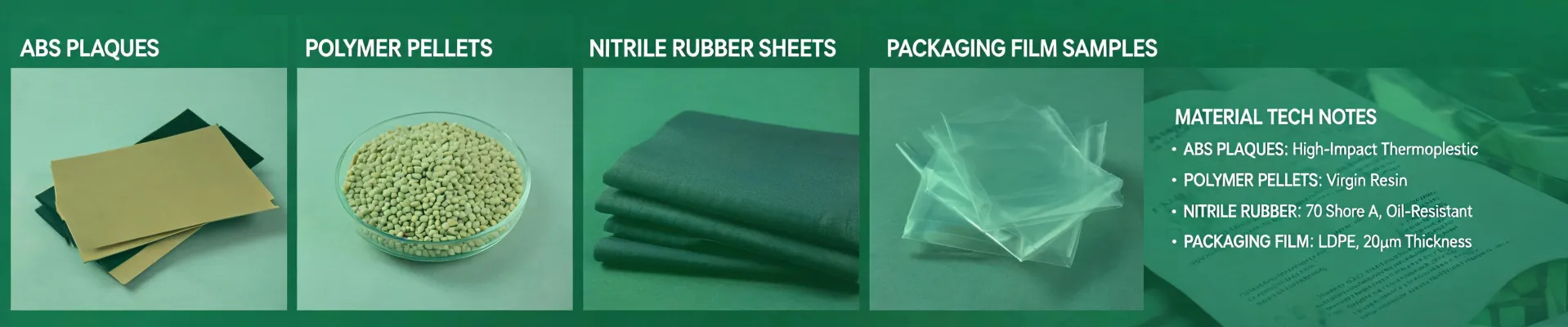
Quick answer to the question I see most often: yes, LyondellBasell does produce polycarbonates. It's part of their Advanced Polymer Solutions portfolio, alongside polyethylene and polypropylene. But that's rarely the whole question. What people usually want to know is how polycarbonate actually compares to other materials—TPU and extruded HDPE in particular—when they're specifying a real project.
I'm a quality and brand compliance manager at a polymer processing company. I review every material spec before it reaches our production floor—roughly 200+ unique grades annually. In 2024, I rejected about 12% of first deliveries due to spec mismatches. That rejection rate taught me more about material comparison than any data sheet ever did.
Here's how I structure comparisons now: mechanical performance, processing behavior, supplier reliability, and application fit. Four dimensions. At least one conclusion below surprises people—I'll flag it when we get there.
Mechanical Performance: Where Each Material Actually Wins
Polycarbonate gets specified for impact resistance and rigidity. It's transparent in natural grades, holds dimensions well, and handles drop tests without shattering. According to ASTM D256 impact testing data (the standard I use for incoming verification), PC typically delivers much higher notched Izod values than HDPE. That's why protective enclosures and phone case backplates default to PC.
TPU is the opposite profile. It's elastomeric—flexible, abrasion-resistant, and it absorbs energy by deforming rather than resisting. ASTM D638 tensile data shows TPU with much higher elongation at break than PC. If you need something to grip, flex, or seal, TPU does that better.
Extruded HDPE sits differently. Moderate stiffness, good chemical resistance, low moisture absorption, opaque. It's not the hero material for mechanical performance, but it's reliable and cost-effective for pipe, film, and containers. When we specified extruded HDPE for a chemical transport line in 2023, the deciding factor wasn't strength—it was that PC would have stress-cracked under the same chemical exposure within 18 months.
I went back and forth between PC and TPU for two weeks on a phone case program in early 2024. On paper, PC made sense for the backplate. But our drop-test data kept pointing to TPU for the frame. The PC vs TPU decision kept me up at night for a while. Ultimately we used both—PC for structure, TPU for impact absorption. That's the dirty secret of "TPU vs polycarbonate" comparisons: plenty of high-end phone cases use both. It's not a binary choice.
The best material decision is often a combination, not a selection.
Here's the counterintuitive point: PC's impact strength is excellent, but it's notch-sensitive. A sharp corner or a molding defect can turn a high-impact grade into a brittle failure. TPU doesn't have that failure mode. So for applications with complex geometry, TPU can actually be more forgiving despite lower tensile numbers on the data sheet.
Processing Behavior: Where My Assumptions Got Corrected
This is where I ate a mistake. They warned me about PC moisture absorption. I'd read the data sheet—I knew it was hygroscopic. But I didn't check our dryer specs closely enough. We ran a batch with insufficient drying time and the parts came out with visible splay and a 15% drop in impact strength. Scrapped a 2,000-unit run. That's when I became the person who checks dryer logs before approving any PC production slot.
Extruded HDPE is usually described as easy to process. That's mostly true. But easy doesn't mean forgiving. We didn't have a formal incoming material verification process for HDPE wall thickness. Cost us when a batch arrived with thickness variation that was technically inside spec but visually inconsistent—enough that our customer rejected the shipment. Took two weeks to sort out. The third time that kind of issue happened, I finally created a verification checklist. Should've done it after the first time.
TPU processing is somewhere in between. It's also hygroscopic, so drying matters—same lesson as PC, just less dramatic. The bigger issue is viscosity consistency between lots, especially if you're sourcing from multiple suppliers. I've seen TPU from two equivalent grades process 10°C apart in melt temperature, which throws off cycle time and part quality.
Supplier Landscape: LyondellBasell, ExxonMobil, and What Actually Matters
To be fair, comparing a PC supplier to an HDPE supplier isn't apples to apples. They're different material categories with different applications. But the selection criteria are similar: consistency, documentation, and how they handle the "what's NOT included" conversation.
LyondellBasell's polycarbonate grades come through their Advanced Polymer Solutions segment. Their literature covers standard molding and extrusion grades with processing windows and regrind recommendations. I've found their documentation solid on those points. That matters more than a brand name—if I can't find a clear statement on regrind limits, I assume there isn't one.
ExxonMobil is one of the major global suppliers of HDPE. Their portfolio covers blow molding, injection molding, and extrusion grades. I've used ExxonMobil HDPE for extruded pipe applications and found lot-to-lot consistency good. No complaints there—spec met spec.
The vendor who lists all fees and limitations upfront—even if the per-kilo price looks higher—usually costs less in the end. I've learned to ask "what's NOT included" before "what's the price." That applies to material suppliers too. A data sheet that openly flags processing limitations is more trustworthy than one that claims no weaknesses. (Should mention: no polymer is weakness-free. If the data sheet doesn't mention a limitation, the sales rep will, and I'd rather hear it before the PO than after.)
Application Fit: TPU vs Polycarbonate Phone Case
Since this comparison comes up specifically for phone cases, let me be direct: it's not really TPU vs PC. It's TPU plus PC, or TPU alone for flexible cases.
- Rigid protection (backplate): PC wins on stiffness and scratch resistance. Clear PC backplates are the standard for a reason—they don't yellow as fast as TPU and they hold shape.
- Drop absorption (bumper): TPU wins on energy dissipation. The soft frame deforms on impact and springs back. We saw roughly 20-30% better drop performance in TPU-framed cases vs PC-only in our own testing.
- Combined design: Most premium cases use a PC core with a TPU overmold or bumper. The cost increase is real—roughly 15-25% over TPU-only based on quotes we received in 2024—but the drop-test performance justifies it for flagship devices.
Granted, if you're making a budget case, TPU-only is cheaper and good enough for many users. But if the spec says military-grade drop protection, you need the rigid PC component. And if you're specifying PC, check the notch sensitivity at your wall thickness—thin walls and sharp corners are where PC fails first.
What I'd Choose (and What I'd Ask First)
Here's my honest recommendation by scenario:
- Need transparency + rigidity + impact resistance: Polycarbonate. Verify your drying capability before committing—ask the supplier for their recommended moisture content and check your dryer can hit it.
- Need flexibility + abrasion resistance + energy absorption: TPU. Check viscosity consistency across lots and ask for lot-specific melt flow data.
- Need chemical resistance + cost control + extrusion processing: Extruded HDPE. Verify wall thickness tolerance with a first-article inspection before running full production.
For supplier selection between LyondellBasell and ExxonMobil's HDPE—and I've used both—the material performance is often comparable within grade. The differentiator is documentation and responsiveness. Ask for regrind recommendations, processing windows, and lot-to-lot property data. The supplier who provides all three without pushing back is the one I'd keep.
One last thing: none of these materials are best. PC isn't better than TPU. HDPE isn't a downgrade from PC. They solve different problems. The quality inspector's job isn't to rank materials—it's to match the material to the spec and verify that match before production. That's less exciting than a top 3 polymers list, but it's what actually prevents rework and rejected shipments.
Ask About This Topic