The Call That Changed How I Think About Plastic Boats
It was a Tuesday afternoon in March 2024. I'm a supply coordinator at INEOS—the kind of person who spends most days matching polymer grades to customer specs. Normal stuff. Then the phone rang.
"I need 200 kilos of thermoplastic rubber. By Friday. For a plastic boat." The voice on the other end belonged to a small boat builder in Florida. He'd just lost his supplier and had a 48-foot hull half-finished in his shop. Downtime was costing him $1,200 a day.
Normal turnaround for a specialty compound like that? Two weeks. He had three days. My gut said no. The numbers said maybe—if we pulled every lever.
Why Thermoplastic Rubber? And What's the Deal with HDPE?
The boat builder needed the material for a non-skid deck overlay. Thermoplastic rubber (TPR) is great for that—flexible, UV-resistant, grippy. But here's where things got tricky. He kept asking about HDPE: "What number is HDPE plastic? Can I just use that?"
I explained that HDPE is recycling code #2. It's stiff, chemical-resistant, great for fuel tanks or structural ribs. But for a deck overlay? Wrong choice. HDPE doesn't bond well with TPR, and it gets brittle in direct sunlight over time. This was a classic case of the right material for the wrong job.
He'd read online that "plastic boats are all made from HDPE"—a myth that dates back to the 1970s when rotomolded kayaks dominated. Today's plastic boats use a mix: structural frames from HDPE or polypropylene, but deck surfaces from TPR or polyurethane. The old belief? Still floating around. (Note to self: never underestimate the power of a 50-year-old myth.)
The Frantic Search: Data vs. Gut
Our internal inventory showed we had the right TPR grade in stock—INEOS Styrolution's SX-100. The data said: ship it, standard expedite, 2-day delivery. Cost: $3,200 base plus $880 rush fee. But something felt off. The boat builder mentioned the deck would be exposed to saltwater and heavy foot traffic. The SX-100 is a general-purpose TPR. What about marine-grade?
I called our tech team. Turns out the SX-100 has decent saltwater resistance but lacks the abrasion resistance needed for constant foot traffic. We'd be setting him up for failure. The numbers pointed one way; my gut said dig deeper. I'm glad I listened.
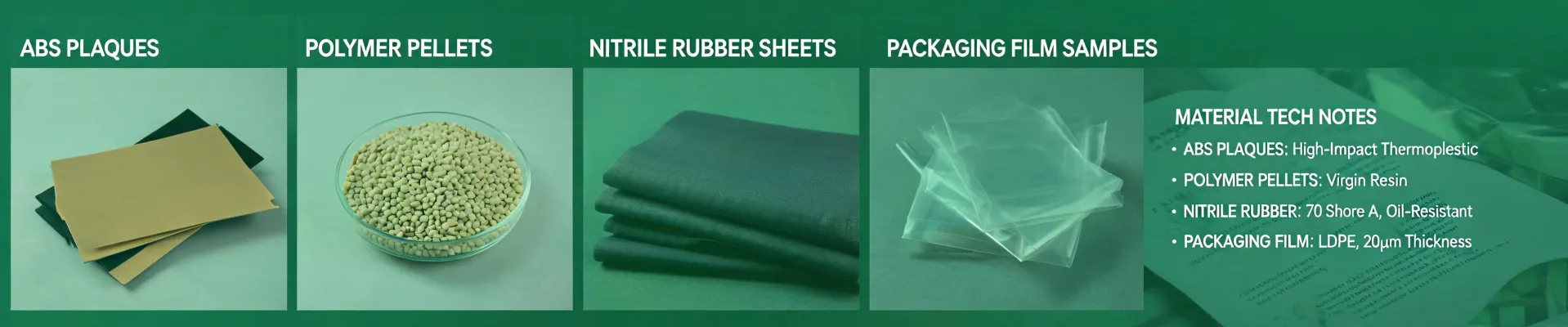
We switched to INEOS' ST-400—a reinforced TPR with higher durometer (85 Shore A vs. 70) and better UV stabilizers. Price bumped to $3,800 base. Rush fee: $950. Total: $4,750. His alternative if we failed? A $15,000 loss in delayed launch and a damaged reputation.
The Moment of Truth
Thursday morning, 36 hours before his deadline. The truck arrived at 10:17 AM. He called at noon: "It's perfect. But I just spent an hour explaining to my customer why we didn't use HDPE like their uncle's old boat."
I laughed. Then I realized: this is the real job. It's not just shipping polymer—it's helping people unlearn outdated ideas.
Honest Limitations: What TPR Can and Can't Do
Here's the part I'd skip if I were writing a brochure. Thermoplastic rubber is amazing—for deck overlays, gaskets, shoe soles, medical tubing. But it's not for everything:
- Good for: flexible parts, vibration damping, weather seals.
- Not good for: load-bearing structures (use HDPE or polypropylene), high-temperature environments (over 120°C), or applications requiring rigid dimensional stability.
If you're building a plastic boat, here's a quick cheat sheet:
"HDPE (code #2) for hull structural frames and fuel tanks. Polypropylene (code #5) for interior panels. Thermoplastic rubber for non-slip decking, rub rails, and hatches. Each has its lane."
I recommend TPR for your deck—but only if you're using a marine-grade compound like the ST-400. For the hull itself? Stick with HDPE. Simple.
What Could Have Gone Wrong (And Why I Now Sleep Better)
That order nearly went sideways three times:
- We almost shipped the wrong grade because I trusted the database without questioning conditions.
- The rush carrier almost refused the shipment—oversized pallet. We paid $200 extra to re-palletize.
- The customer almost went with a cheaper TPR from a discount vendor. I showed him data on abrasion loss (0.03g vs. 0.12g per 1000 cycles). He chose us.
Lesson: The lowest quoted price is rarely the lowest total cost. That discount vendor might save you $800 upfront—but if the material fails, you're re-doing the job, losing time, and buying twice. I've seen it happen. (I really should write a case study on that.)
Final Thought: A Little Humility Goes a Long Way
The boat builder later told me he'd called three other polymer suppliers that Tuesday. Two said "sure, we can do that" without asking any questions. One said "we don't have that grade, try someone else." I asked him why he went with INEOS. His answer: "You were the only one who said 'that material might not work for your application.' That honesty saved my project."
And that's the real value of expertise—not saying "yes" to everything, but knowing when to say "no, but here's what will." It's a lesson I've learned the hard way after handling over 300 rush orders (as of early 2025, at least).
If you're ever wondering what number HDPE plastic is, or what thermoplastic rubber is good for, or how to choose materials for a plastic boat—just ask. But be prepared for an honest answer, not a sales pitch.
— A supply coordinator who still double-checks the spec sheet before hitting 'ship.'
Ask About This Topic