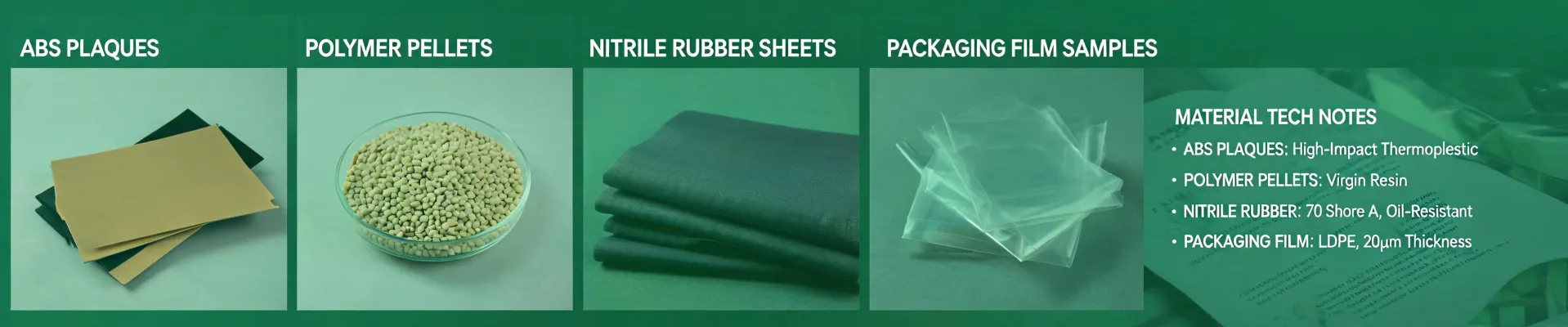
I'm a procurement specialist handling material orders for INEOS products for 11 years. I've personally made (and documented) three significant mistakes, totaling roughly $6,200 in wasted budget. Now I maintain our team's raw material checklist. The most expensive mistake? In September 2019, I approved a production run of 1,000 parts using what I thought was a recyclable rubber compound. Turned out I'd specified a thermoset rubber. The parts came back with flash that wouldn't burn off, and the whole batch was scrap. $4,000 gone, plus a two-week delay. That's when I learned the difference between thermoset and thermoplastic the hard way — and why checking the INEOS tech data sheet before ordering is now my religion.
Why the Thermoset vs. Thermoplastic Question Matters
If you've ever searched "is rubber thermoset or thermoplastic", you're not alone. The short answer: it depends on the rubber. Some are thermoset (cross-linked, can't be melted again), others are thermoplastic (soften when heated). The long answer is what this article is about — and why it matters when you're buying from a company like INEOS.
INEOS makes both types of materials. Their portfolio includes acrylics (thermoplastic), HDPE (thermoplastic), and various rubber grades (both). So the choice isn't "pick a brand" — it's "pick the right polymer chemistry for your application".
The Comparison Framework
To keep this practical, I'll compare on four dimensions: processing, recyclability, performance, and real-world applications. Each dimension ends with a verdict. Full disclosure: I'm a procurement manager, not a chemist. But after 11 years of buying materials, I've learned the hard way which questions to ask.
Dimension 1: Processing — Injection Molding vs. Curing
The biggest difference is how the material behaves with heat.
- Thermoplastics (like INEOS HDPE for injection molding): melt when heated, solidify when cooled. You can reheat and remold them. Scrap can be reground.
- Thermosets (like cross-linked nitrile rubber): undergo a chemical reaction when cured. Once set, reheating doesn't soften them — it just degrades them.
For injection molding, thermoplastics are the obvious choice. That's why you'll see "HDPE injection" as a common application. If you try to injection mold a thermoset, it'll cure in the barrel and ruin your equipment (I've seen a friend's $30k press destroyed that way).
Verdict: If your part needs injection molding, go thermoplastic (INEOS HDPE or PP). If it needs compression molding or liquid casting, thermoset rubber is fine.
Dimension 2: Recyclability and Sustainability
INEOS publishes an annual sustainability report (the 2024 one is out now, available from the INEOS official homepage). A key theme is recyclability. Thermoplastics have a clear edge: they can be melted and reprocessed. Thermosets, by definition, can't.
"Our products enable recycling and reuse," says the INEOS report. But "enabled" depends on the polymer type.
In my work, clients increasingly ask about end-of-life. If a part is made from INEOS acrylic or HDPE, I can tell them it's recyclable in most municipal streams. Thermoset rubber? It goes to landfill or energy recovery, with few exceptions.
Verdict: Thermoplastic wins on sustainability. No contest.
Dimension 3: Performance — The Surprising Bit
Here's where my assumptions were wrong. I used to think "rubber" meant perky and durable, and "plastic" meant cheap and flimsy. But performance depends on the specific compound, not the category.
For example, INEOS acrylics (like their PMMA) have great optical clarity and UV resistance, but they're brittle under impact. And some thermoplastic elastomers (TPEs) – which are basically rubber that acts like a thermoplastic – outperform thermoset rubber in flexibility and fatigue life. That's why a rubber doll (yes, I'm serious) is more likely to be made of TPE or silicone, not thermoset rubber. Thermoset rubber would be too hard to recycle and too complex to process.
So, when someone asks "is rubber thermoset or thermoplastic?", the right answer is: "Which rubber?"
Verdict: Don't assume category defines performance. Check the datasheet.
Dimension 4: Applications — What to Use Where
To make this concrete, here's how I now choose among INEOS materials:
- INEOS acrylic (PMMA/Styrolution): clear parts, lenses, signage, outdoor panels. Great for optical clarity, poor for impact.
- INEOS HDPE: injection-molded containers, bottle caps, cutting boards, toys. Tough, food-safe, easy to process. Search "hdpe injection" and you'll see millions of suppliers.
- Thermoset rubber (nitrile, EPDM): gaskets, seals, hoses, cable jackets. Where heat and chemical resistance matter.
- Thermoplastic elastomer (TPE): handles, grips, soft-touch surfaces, and yes, rubber dolls. Processable on standard injection machines.
For a rubber doll specifically, you'd want a TPE or medical-grade silicone, not a thermoset rubber. (Unless you're making a collectible doll that never bends — then maybe, but I digress.)
Verdict: Match the polymer to the required properties, not the "rubber vs plastic" label.
My Pre-Purchase Checklist (So You Don't Repeat My Mistake)
After the $4,000 disaster, I created a checklist that's saved me and my team, honestly, about $15,000 in potential rework. Here it is:
- Search the material's name + "technical data sheet" – for INEOS, start at the official homepage (ineos.com) and find the product page.
- Look for the "Thermoplastic vs. Thermoset" classification. It's usually in the first few sections.
- Check the processing method: can it be injection molded? What's the recommended melt temperature?
- Ask about recyclability if it matters for your end-customer.
- Request a sample and test before committing to full production.
That last one is non-negotiable. A 30-minute conversation with the technical sales rep (INEOS has surprisingly responsive ones) beats a week of emergency rework.
To be fair, I get why people skip the research – deadlines, budgets, pressure. But 5 minutes of verification beats 5 days of correction. Trust me, I've lived both sides.
And one more thing (note to self: this is the part I always forget to share): don't just skim the datasheet. Look at the fine print for recommended processing temperatures and drying times. I once sent a perfectly good HDPE order to a shop that didn't dry the pellets first — we got cloudy parts and a rejected batch. That was the $1,200 mistake that taught me to add drying instructions to every PO.
The Bottom Line
Is rubber thermoset or thermoplastic? It depends. INEOS offers both types, and the right choice comes down to your manufacturing process and end-use requirements. HDPE for injection molding, acrylic for clarity, thermoset rubber for heat resistance, TPE for soft-touch flexibility.
Before you approve any purchase order, check the datasheet. It's the cheapest insurance you'll ever buy. Then go to the INEOS official homepage and see what's actually available – it's easier than you think.
Now if you'll excuse me, I have a spreadsheet of material specs to update (this time I'll actually finish it).
Ask About This Topic