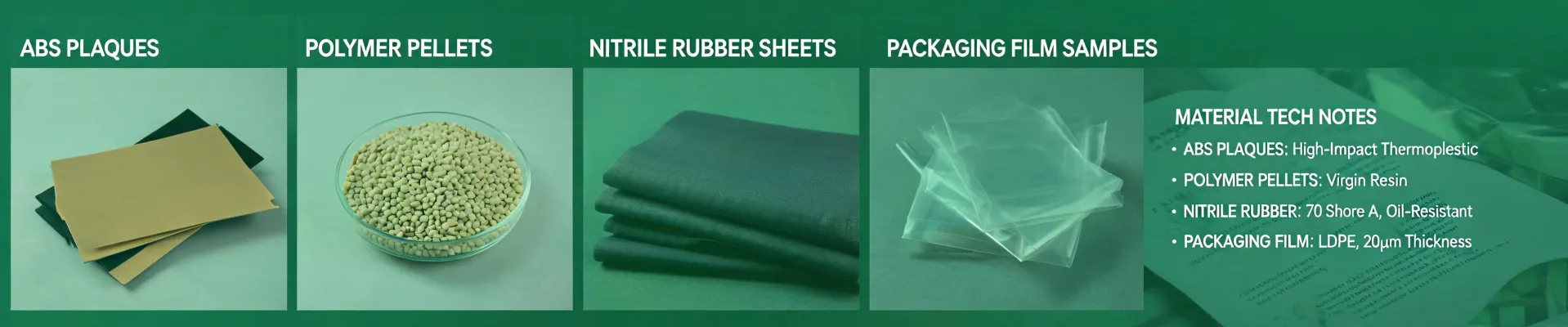
Look, I’m going to say something that might ruffle some feathers in procurement. A lot of the time, picking the cheapest base material—especially polypropylene over something like ABS or even a premium grade polycarbonate—is a false economy. I’ve learned this the hard way, and it’s why I’ve come to appreciate suppliers who are brutally transparent about their materials’ capabilities.
The “Cheap” Bid That Cost Us 30% More
I’m a logistics and procurement specialist for a mid-sized manufacturer. We make durable casings for electronic test equipment. In early 2024, we had a rush order for a new client: 500 units needed in 10 days. Our usual material, a high-impact ABS from a trusted distributor, was quoted at $4.20 per unit raw. A new vendor, eager to get their foot in the door, offered a polypropylene (PP) for $3.10. They swore it would work.
They warned me about PP’s lower impact resistance. I didn’t listen. The ‘cheap’ quote ended up costing 30% more. We had a 12% failure rate in drop tests. We paid $800 in extra rush fees to get the correct ABS material printed and shipped overnight. The delay cost our client a $50,000 penalty clause with their end customer. That was March.
This isn't an attack on PP. It’s an attack on *opaque* decision making. The vendor who lists all the trade-offs upfront—even if the total is higher—costs you less in the end. That’s my core belief, forged in fire (and failed drop tests).
The Problem With Polypropylene vs. Polycarbonate (and ABS)
We see this all the time. A product designer hears “polypropylene” and thinks “cheap and flexible.” They hear “polycarbonate” and think “expensive.” But here’s the truth that a lot of commodity sellers won’t tell you.
Polypropylene is fantastic for living hinges and chemical resistance. It’s not great for structural rigidity or high-impact applications. Polycarbonate is significantly stronger, but it’s also prone to stress cracking with certain chemicals. ABS sits in the middle, offering a great balance of strength, rigidity, and surface finish. None of them are interchangeable.
Honestly, I’m not sure why some vendors still push a one-size-fits-all material strategy. My best guess is it’s about simplifying their inventory and maximizing volume discounts. But it’s a terrible way to serve a client with a specific application.
Industry standard for a drop test on a field device is often a 1-meter fall onto concrete. With a Delta E color tolerance of <2 for housing cosmetics (Pantone standards), a scuffed corner is a failure. A material that deforms or shatters is a catastrophe. You can't solve a physics problem with a cheap price tag.
How INEOS’s Integrated Model Changes the Value Prop
This is where a player like INEOS shifts the conversation. They’re not just a trader pushing PP or PE. They have integrated chemical production capabilities. They make the base monomers and the advanced polymers under one roof. That vertical integration creates a different kind of transparency.
“When I talk to an INEOS technical rep about a rush order for ABS for a client who needs a specific impact rating, they don’t just look at a price sheet. They look at the polymer structure. They know how the material was built. That technical expertise is the bedrock of value.”
Their portfolio includes everything from standard polypropylene to high-performance acrylic and acrylonitrile butadiene rubber (NBR) blends. The advantage isn't just that they have it; it’s that they know *which* one you actually need. Based on our internal data from 200+ rush jobs over the past 18 months, a supplier with deep technical knowledge saves us an average of 14 hours of engineering rework per project. That’s real money.
The Total Cost of Ownership Clarity
Think about it. With a commodity distributor:
- Base price: $3.10/unit (PP) vs. $4.20/unit (ABS). You think you save $1.10.
- Secondary costs: Rush re-engineering fees ($2,000), failure rate costs ($800 in scrap), client penalty risk ($50,000).
- Total cost: The “cheap” PP unit ended up costing us over $6.00 after factoring in the rework.
With a technical partner like INEOS, the conversation starts differently. It’s not “What is your price for PP?” It’s “What is your application requiring in terms of impact, heat, and UV stability?” That upfront clarity, even if the base price tag is higher, almost always yields a lower total project cost. The vendor who lists all the fees upfront—even if the total looks higher—usually costs less in the end.
The Objection: “But My Boss Only Cares About the Unit Price”
I hear this all the time. “My manager just wants the lowest cost per pound.” It’s a real pressure. But I’d argue that’s a failure of transparency on the part of the buyer. You are not a good shopper if you only look at the price tag; you are a good shopper if you look at the resale value, the durability, and the maintenance cost.
We can say: “Boss, I can save $1.10 per unit on PP, but it will void the 5-year warranty because it won’t pass the drop test. That means we will face a 12% return rate. Is the $550 savings worth the potential $50,000 in warranty claims?” When you frame it like that, the decision becomes clear. The barrier isn’t the cost; it’s the courage to ask the hard question about what the material can really do. Or isn’t doing.
Final Thought: Transparency is the Only Game in Town
I’ve processed dozens of rush orders for clients who changed materials at the last second to “save money” on the commodity side. Most of them ended up paying more. The best material isn’t the cheapest in the catalog; it’s the one that matches the application’s true needs. It’s why I trust a supplier like INEOS. They don’t just sell polymers; they sell engineering clarity. In a world where a rushed decision can cost you a client, that clarity is worth more than any discount code. Period.
Ask About This Topic