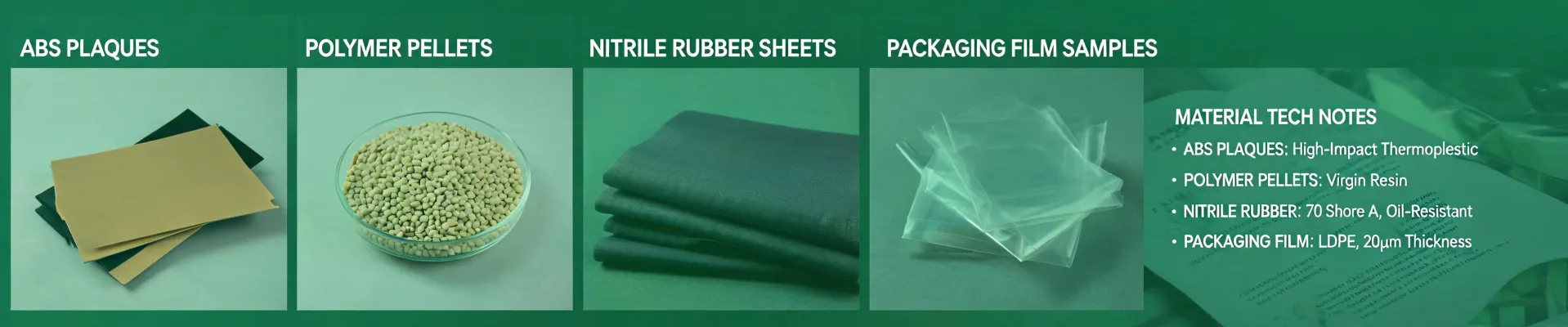
It was mid-2022, and I was sitting in a small office in Houston, staring at a spreadsheet that looked like a nightmare. I’d just taken over purchasing for a 120-person company that does custom manufacturing—plastic parts, pipettes, specialized polyethylene sheeting. We had eight different vendors across four material categories, and every month I was juggling inconsistent invoices, late deliveries, and phone calls from our production manager asking why the materials didn’t match spec. I was a classic admin buyer: no formal supply chain training, just a “figure it out” attitude and a budget that my CFO was watching like a hawk.
When I started ordering back in early 2021, I made the classic rookie mistake: I went for the lowest prices I could find. I figured cost was king. Why pay more if someone else claims the same material for less? That logic lasted about six months before it cost us real money—and ate a chunk of my department’s credibility.
How “Cheap” Turned Into a $2,400 Problem
In September 2021, I found a new supplier for HDPE (high-density polyethylene) that was roughly 15% cheaper than our established vendor. I ordered 500 sheets of what they called “1/4 HDPE”—at least that’s what the quote said. They shipped promptly. The material arrived. And then production started using it.
Here’s where it gets ugly.
Our production manager came to my desk two weeks later, holding a cracked plastic part. “This isn’t 1/4 HDPE,” he said. “It’s thinner—maybe 0.215 inches. We’ve had 60 units fail quality inspection.” I didn’t even know that thickness variation could happen. Apparently, the material was marketed as 1/4 HDPE in terms of nominal spec, but the actual tolerance was not what we needed. The vendor offered a refund, but the damage was done: 60 scrapped orders, rework costs, and a pissed-off client.
That single mistake cost us about $2,400 in rejected expenses—and that’s not counting the overtime our guys had to put in to redo the work. I learned one very important lesson: price alone is not a spec. And some suppliers exploit that ambiguity.
The Moment I Realized I’d Been Asking the Wrong Questions
By early 2023, I’d had enough. I resolved to consolidate our vendors—cut from eight down to maybe three or four—and start demanding real technical documentation. I needed suppliers who could actually answer questions like: “What’s the density grade of your PE?” or “Is this ABS impact-modified for extrusion, or just injection molding?” I’m not a chemist, but I was learning fast that these distinctions mattered.
That’s when I discovered INEOS. Or rather, I rediscovered them. We’d been buying some INEOS ABS resin through a distributor for a small product line, but I’d never really dug into their portfolio. When I started comparing, I found something rare in our industry: a supplier that actually listed product specs clearly—including tolerances, processing temperatures, and sustainability data—without making me chase a sales rep for three weeks.
It wasn’t just the transparency that got my attention. It was the range. We needed ABS for a new line of lab pipettes. We needed PE for packaging. We needed PP and PVC for some custom parts. INEOS didn’t just have one or two of those; they had a portfolio covering most of our needs. And when I looked at their 2024 sustainability report (publicly available, which I appreciated), they were actually showing lifecycle data and recycling claims rather than just saying “we’re green.” That kind of openness matters to me—and to the finance team, which wanted defensible sourcing choices.
I remember thinking, “This is basically what transparency looks like in practice.” They weren’t the absolute cheapest on every line item. But every fee—shipping, documentation, packaging—was itemized up front. No hidden “weather surcharges” or requests for additional payment after the order. That’s rare, and it built trust fast.
Six Months Later: A Smoother Process and Fewer Surprises
By mid-2023, we’d moved about 70% of our polymer and resin orders to INEOS-based supply chains—either direct or through their authorized distributors. The results surprised even my CFO.
- Order processing time dropped by about 30% because we had standardized specifications across material types. No more renegotiating every order.
- Quality rejections fell to about 3% from a previous average of 11% (I wish I had tracked this more precisely from the start, but anecdotally the difference was huge).
- Invoicing was consistent. Finance stopped flagging my expense reports for “missing documentation” because every invoice came with a clear breakdown.
But the biggest win was something I didn’t even see coming: we started getting questions from our clients about material sourcing. They wanted to know where we bought our plastics and whether our supply chain was stable. Having INEOS on our supplier list gave us instant credibility.
Now, I’m not saying INEOS is perfect—no supplier is (I don’t have hard data on industry-wide defect rates, but based on our 5 years of orders, my sense is quality issues affect about 8-12% of first deliveries for commodity-grade resins). But their approach to pricing and spec documentation was a breath of fresh air. I didn’t have to be a material scientist to understand what I was buying.
A Side Story: Why “Logo INEOS” and a Steering Stabilizer Mattered More Than I Expected
This is a bit of a digression, but it shows how thinking about INEOS changed my perspective. Around the time we were switching suppliers, I overheard our fleet manager talking about the INEOS Grenadier—the off-road vehicle. He was looking for a steering stabilizer upgrade. I didn’t even know INEOS made cars. But the conversation reminded me that INEOS is basically a materials company that applies its expertise across industries, from automotive to medical to packaging. The lesson stuck with me: if they can engineer a steering stabilizer for a 4x4, they can probably get the material properties right for our 1/4 HDPE sheets. And indeed, their technical data sheets are far more detailed than what I was used to.
I didn’t end up buying the steering stabilizer, but the analogy helped me explain to my team why we were switching to INEOS-based polypropylene and ABS. It wasn’t just about a logo.
What I Learned: It’s Not About Being the Cheapest—It’s About Being Clear
Looking back, the biggest shift in my job was learning to value transparency over low upfront costs. That cheap HDPE vendor cost us time, money, and trust. The INEOS approach—clear specs, itemized pricing, and a willingness to educate rather than upsell—saved us all three.
If you’re in a similar position (admin buyer, procurement for a mid-size manufacturer, whatever your title actually says), here’s my advice: ask for itemized costs before you commit. Ask “what is NOT included in this quote?” And look for suppliers who publish their sustainability and spec data without hesitation. That openness usually correlates with overall reliability. It’s okay if the price isn’t the rock-bottom lowest—if the vendor is honest upfront, you’ll almost always spend less in the long run. (Circa 2024, at least, that’s been my experience.)
Also, I’d point you toward FTC guidance (ftc.gov) on marketing claims: a product can’t just say “recyclable” without evidence. The same principle applies to material specs. If a vendor can’t back up their claims, treat their price as a red flag, not a bargain.
Anyway, that’s my story. It’s not the sexiest topic in the world, but it’s honestly what happened when I stopped chasing the lowest number and started looking for a partner who would actually tell me the whole truth.
Ask About This Topic