In my first year (2017) handling orders for industrial plastic components, I made a classic blunder. I needed a thousand polypropylene organizer bins. Sizes seemed simple enough, the price from an INEOS-based supplier was solid, and I approved the purchase order in a day.
The bins arrived. They were the wrong color—a kind of sickly mint green—and the lids didn't fit. The whole thing was a $3,200 mistake that went straight to scrap. We caught the error when the floor supervisor called me over. 'These aren't what we spec'd, are they?' I wanted to crawl under my desk. That's when I learned that ordering plastic parts is way more nuanced than just picking a material name off a list.
Since then, I've developed a pre-order checklist that we run on every single plastic component order. It's saved our bacon more times than I can count. Maybe 47 times in the last 18 months, give or take. Here's the checklist I wish I'd had in 2017.
When To Use This Checklist
This isn't for off-the-shelf items. It's for custom or heavily spec'd orders of plastic products like organizers, valve components, pipe fittings, and any part where the material matters. If you're buying, for example, a polyethylene valve for a chemical line, or you're sourcing ABS parts for a display, run this checklist. It's a 5-step process that takes about 20 minutes.
Step 1: Define The Exact Material Grade, Not Just The Name
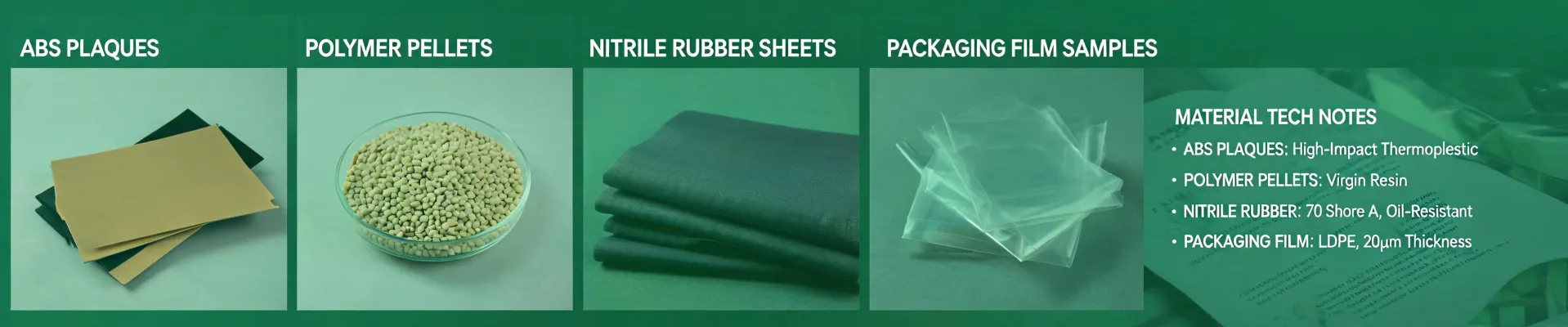
This is where I messed up initially. 'Polypropylene' isn't a single thing. It's a whole family. Are you looking at homopolymer PP or copolymer PP? What's the melt flow index? Does it need to be UV-stabilized? I remember ordering clear acrylic for a project once, and the first sample was opaque. I'd spec'd a general 'cast acrylic' sheet when we actually needed an optically clear grade.
The Check: Write down the specific material designation. For INEOS materials, you might see grades like Eltex® PP or Clevios™. Don't just write 'ABS.' Write 'General Purpose ABS, impact-modified, 1.5 MFR.' If you're a small-biz owner or a product designer, do not guess. Call the technical support line. They *want* to help you not screw up.
Step 2: Proof The Technical Drawing Against The Material
The perfect drawing with the wrong material is a $1,200 failure. I once ordered a thousand HDPE pipe fittings. The drawing was perfect. The material spec said 'HDPE.' But I didn't confirm the pressure rating. The HDPE material grade was for low-pressure irrigation, but the application was a compressed air system. That mistake cost us a 1-week production delay and $890 in redo fees.
The Check: Look at the drawing and ask: Will this material shrink properly in this mold? Does the part geometry cause stress points for this specific polymer blend? Can that thin wall even be filled by this grade? ABS, for instance, can be prone to knit lines in complex molds, while polypropylene is softer and might not hold tight tolerances for a snap-fit lid.
Step 3: The 'Why This Material' Question (This is the Trick)
Everyone asks 'What material?' No one asks 'Why this material?' I started doing this after a project with a polystyrene organizer. The designer spec'd it because it was cheap. But the product was going in a garage in Arizona. The heat made it brittle. We got returns after six months. To be fair, their pricing was competitive for what they offered, but the application was wrong.
The Check: Before you commit, write down one sentence explaining why this specific plastic is right for the job. Examples:
- 'Polypropylene for its chemical resistance and flexibility in the hinge.'
- 'ABS for its impact strength and paintability.'
- 'PVC for its rigidity and cost-effectiveness in non-structural applications.'
If you can't write that sentence, don't order yet. I get why people skip this step—the budget is real and time is short. But it saves time later.
Step 4: The Color & Finish Reality Check
So, your color. The exact color. According to the Pantone Matching System (PMS), industry standard color tolerance is Delta E < 2 for brand-critical colors. A Delta E of 2-4 is noticeable to trained observers; above 4 is visible to most people. That order I messed up? The sample they showed me was a nice neutral grey. The production run, for some reason (I suspect the PP grade wasn't identical), came out mint green.
The Check: Don't rely on a screen. Get a physical color chip under the same lighting the product will be used in. Also, ask about the finish. A matte finish will hide surface imperfections better than a high-gloss, but it won't feel as 'premium.' High-gloss ABS looks great in a showroom but shows every fingerprint in a workshop.
Step 5: The 'What If Something Goes Wrong' Plan
The most frustrating part of vendor management for me: the same issues recurring despite clear communication. You'd think written specs would prevent misunderstandings, but interpretation varies wildly. Always build in a plan for failure.
The Check: Before submitting the PO, answer these:
- What's the maximum acceptable lead time? (Don't just take their standard quote. Push it.)
- What's the penalty for late delivery? (Doesn't have to be legal. Just get it in writing.)
- What's the process for a color or material rejection? (Do you get free re-runs? Who pays for the 3-day production delay?)
- Who is your point of contact for technical issues? (Not the sales rep. The actual engineer.)
Per FTC guidelines (ftc.gov), claims about the product's performance must be truthful and substantiated. If the supplier says 'it's UV-resistant,' make them show you the test data. This is especially true for things like polyethylene valves or nitrile rubber gaskets where failure can be costly.
One Final Note On Vendors
The vendor who said 'this isn't our strength—here's who does it better' earned my trust for everything else. The best suppliers won't pretend they can make everything. If you're talking to a generalist who says 'we can do that, no problem' without asking detailed questions, that's a red flag. A good specialist will ask about the material's fill temperature, the part's intended environment, and your tolerance for warp.
I'd rather work with a specialist who knows their limits than a generalist who overpromises. That's the lesson I learned after throwing away $3,200 worth of mint-green bins. (Should mention: we now keep a sample box of every material and color we've ever ordered. It's saved us multiple times.)
Ask About This Topic