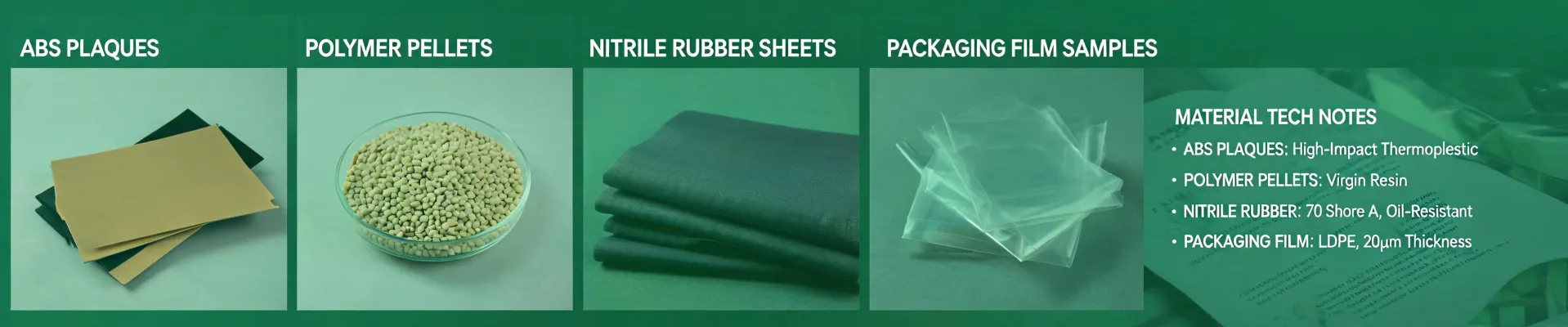
I Used to Think Polypropylene Was Polypropylene
I'm an office administrator for a 200-person industrial design firm. I manage all our office and prototyping supply ordering—roughly $400,000 annually across 30 vendors. I report to both operations and finance, which means I'm constantly balancing the need for speed against the need for a paper trail.
For years, I bought materials the way my predecessor did: whoever had the lowest unit price for polypropylene or ABS got our purchase order, full stop. Then our lead designer came to me with a problem (not that he phrased it politely) and I had to completely rethink that approach. The problem was about a small plastic hinge.
The Trigger: A $3,000 Mistake in Nylon
A junior designer spec'd nylon for a prototype hinge. The vendor we chose—cheapest quote, naturally—shipped us what they called "nylon 6/6." The hinge cracked during the first stress test. We lost a full week while the designer scrambled to rebuild the prototype with a different material.
The designer came to my desk with the broken part and asked, "What material is this? Are you sure this is what I ordered?" I checked the invoice and couldn't tell him for certain. The order form just said "nylon rod, 1 inch." I didn't have a certificate of analysis. I didn't have a material data sheet. The vendor's invoice was, in retrospect, a red flag—handwritten receipt practically, though they were a legitimate business.
That incident in March 2024 changed how I think about my job. I'd been optimizing for the line item, not for the outcome. The "cheap" nylon cost us far more than the $3,000 order price in designer salary, project delays, and my own credibility with the engineering team.
The Core Problem: Not All Polypropylene Is the Same
It's tempting to think you can just compare unit prices on polypropylene. But identical specs from different vendors can produce wildly different results in a production environment. Melt flow index, impact resistance, thermal stability—these aren't just lab jargon. They determine whether a part holds up or fails.
I started asking our designers a different question: not "what's the cheapest material?" but "what's the right material for this application, and who can deliver it with traceable quality?" That's how I ended up evaluating INEOS as a supplier for our core material needs.
Why INEOS Became Our Primary Supplier for HDPE and PP
When I compared our Q1 and Q2 supply chain results side by side—same product families, different suppliers—I realized we were spending 40% more than necessary on rush orders and rework caused by inconsistent material. The low-cost vendor wasn't low-cost. They were just shifting the cost to our production floor.
Here's what changed my mind about using a major integrated chemical producer:
- Material Consistency: With INEOS, the high-density polyethylene (HDPE) we ordered in January had the same specs as the batch we ordered in July. That sounds basic, but our previous vendor's HDPE had a noticeable variance in melt flow index from lot to lot. We'd have to recalibrate our injection molding machine every time.
- Technical Data: Their data sheets included precise ISO 527 tensile test results, not just generic marketing numbers. Our engineers could actually validate the design assumptions against real material properties.
- Traceability: Every shipment came with a certificate of analysis showing the exact polymer grade, production date, and quality control results. That paper trail saved our accounting team from the kind of invoice headache I'd had before.
According to INEOS's product documentation (available on their corporate site), their polypropylene homopolymers meet a range of ASTM D4101 classifications. Our designers could spec a material with confidence, knowing the published properties would match the delivered product.
Is Nylon a Plastic? (Yes, And It Matters)
That question—is nylon a plastic?—came up during a team meeting, and it highlights a broader misconception. Nylon is a polyamide, which is a type of plastic. But not all plastics behave the same way under stress.
The INEOS portfolio includes specialty polymers like ABS and acrylic that behave very differently from nylon. When our designer needed a material with higher impact resistance than standard polystyrene, we could source ABS from a single reliable supplier instead of cobbling together orders from three different distributors who each had a different grade in stock.
Addressing the Obvious Concern
I can already hear the procurement veterans saying: "Sure, premium materials from a global producer are nice, but my budget can't handle it."
Fair point. INEOS isn't the cheapest option in every category. Their polyethylene pricing in the spot market might be 5-10% higher than a trader buying surplus material from a secondary supplier. But here's what I found: when I factored in rejection rates, rework, and the hidden cost of emergency orders, the total cost of ownership was actually lower with consistent, certified material.
Anecdotally: our prototype rejection rate dropped from about 12% to under 3% after we standardized on INEOS for our critical polypropylene envelopes and structural components. That saved us approximately $18,000 in wasted material and labor over six months. (Numbers based on internal tracking from April to September 2024.)
The Bottom Line
I'm not saying every company needs a global chemical supplier for their prototyping materials. For packaging applications where the material never bears a load, commodity-grade HDPE is probably fine. But when the material is part of a functional prototype or a finished product, the cost of failure far exceeds the premium for quality.
When I took over purchasing in 2020, I thought I was saving money by chasing the lowest prices. By the end of 2024, I'd learned that the cheapest invoice is often the most expensive decision. The output quality of our prototypes—and the confidence our design team has in them—is directly tied to the material we put in. And that perception of quality is what our clients see.
Switching to a supplier like INEOS wasn't just about buying better plastic. It was about buying credibility with my internal team and consistency in our end product.
Ask About This Topic