I’m a purchasing manager who’s been handling specialty polymer orders for a little over seven years now. My first year—2017—was a firehose of plastic product knowledge, vendor negotiations, and let’s be honest, expensive learning experiences. I’ve personally made (and documented) maybe a dozen significant mistakes, totaling roughly $15,000 in wasted budget across my career. That’s not bragging; it’s just the reality of learning this trade through trial and error—mostly error.
But one mistake stands out. A $4,500 mistake on a plate order that I still kick myself for. It involved polypropylene, ABS, and a misunderstanding that almost cost me a client. Here’s the story, and the checklist I wish I’d had.
The Setup: A Box of Office Partitions
It was February 2017. A manufacturer I’d been working with for about six months asked me to source material for a new product line: modular office partition panels. The specs called for something rigid, easy to cut, and compatible with their existing assembly system. The client’s production manager—let’s call him Dave—mentioned they’d been using “some kind of plastic plate” and that it needed to be “strong but not brittle.”
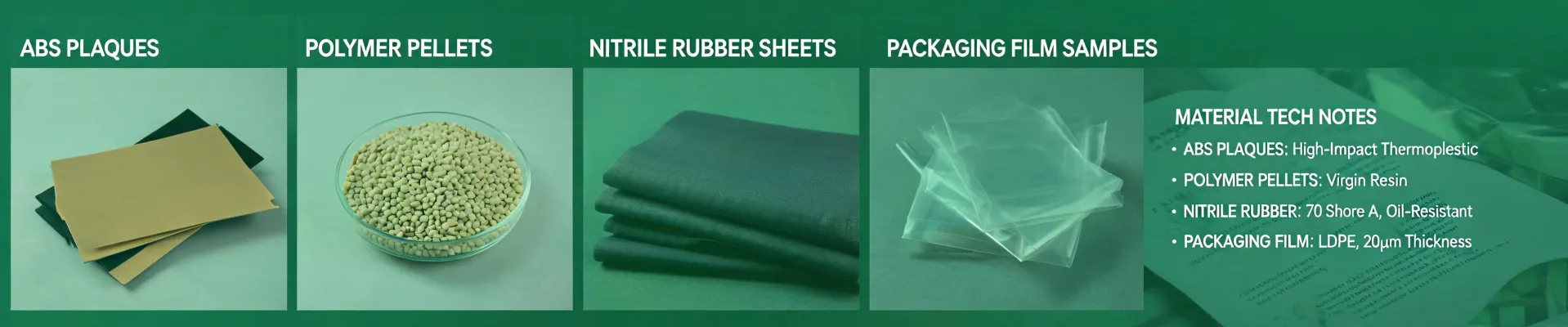
I nodded along, made a few notes, and dove into the INEOS portfolio. The keyword in the back of my mind was ABS plate. INEOS Styrolution makes some of the best ABS in the market. It’s rigid, impact-resistant, and widely used in interior panels. A perfect fit, I thought. ABS plate, order placed. The initial batch? About 200 pieces at $22.74 each, total $4,545 including shipping.
Here’s the thing: I didn’t check the actual physical properties against the client’s production environment. I just looked at the technical datasheet and assumed—wrongly—that ABS’s standard profile matched their assembly process. The plate itself was fine. The context was the problem.
The First Red Flag
The order arrived. Dave’s team started cutting and assembling. Within two days, I got an urgent call. “These plates are warping under the edge-fastener load. We’re getting cracks along the cut lines. We need a replacement—fast.”
Warping. Cracking. Those were words I’d feared. ABS is tough, but it’s not creep-resistant under constant stress, and their fastening system applied constant pressure. Also, ABS can be notch-sensitive along sharp cut edges. The combination was a disaster. My $4,500 order was, effectively, scrap. The client had to halt production for three days while we sourced a replacement, and my credibility took a hit.
“This approach worked for our usual interior panel supplier, but that supplier was using a different fabrication technique. If you’re using edge-fasteners with constant tension, ABS may not be your best bet.” — Me, three years later, in a vendor meeting
The Pivot: Polypropylene Statistics and a New Direction
After that debacle, I met with the INEOS technical team—a conversation I should have had before ordering. They asked: “What specific physical property matters most for the end-use? Is it rigidity? Creep resistance? Impact strength?”
I didn’t have an answer. I’d just assumed ABS plate would work because I’d seen ABS used in similar products. That was my mistake: I was thinking about material types when I should have been thinking about material properties under real conditions.
The technical team suggested a different route: polypropylene (PP). Not just any PP, but a high-rigidity specialty grade with better creep resistance. I was skeptical. PP is often associated with food containers or living hinges—not industrial panels. But I checked the polypropylene statistics: a flexural modulus of 1.5-2.0 GPa for high-rigidity grades, good fatigue resistance, and lower density than ABS. That meant lighter panels with less warping tendency under constant load.
We ordered a trial run: 50 pieces of an INEOS PP-based sheet material. It worked. No warping. Minimal cracking. The client was happy. But I learned something else from that trial: PP is more susceptible to UV degradation and gamma sterilization than ABS, and it melts at a lower temperature. Those wouldn’t matter for indoor office partitions, but for a different client with different requirements—say, medical equipment or outdoor signage—it would be a dealbreaker.
This is where the idea of a “Material Selection Map” was born for my team. Not a full technical reference, but a simple set of questions to ask before choosing between ABS, PP, or any other polymer. The first question: “What constant load will this part experience? What temperature range? What UV exposure?” The second question: “What processing method will be used on our end? Waterjet? Routing? Press fit?” Every material has a sweet spot. ABS plate is excellent for injection-molded components with moderate dynamic loads. PP is better for long-term static loads. But if you ask the wrong question first, you end up with a $4,500 mistake.
The Surprise: Thermoplastic Rubber and the “Is Thermoplastic Rubber Latex” Question
Fast-forward to 2020. I was reviewing a client’s spec for a gasket-type component. The spec sheet said “elastomeric polymer, equivalent to a medium-durometer rubber.” I immediately thought of EPDM or a thermoplastic vulcanizate. But the client explicitly asked: “Is thermoplastic rubber latex?”
That question took me back to the ABS plate mistake. I realized I was about to make the same error—assuming I knew the material class without confirming the specific property. So I did the research. Thermoplastic rubber (TPR) is not latex. It’s a blend of plastic and rubber copolymers that can be processed like plastic but behaves like rubber. It’s often used in medical tubing, gaskets, and grips. For the client’s application, a medium-durometer TPR worked perfectly. But if I’d assumed “rubber” meant “latex like a rubber band,” I could have ordered the wrong material and caused another crisis.
I now include this question in my pre-check list: “Is there any confusion about the material name? Have you clarified the exact property requirement, not just the generic category?”
The Specific Fix: A Pre-Check List Born From Disaster
After that third rejection in Q1 2024 (a $3,200 order where the client wanted a specific surface finish that ABS couldn’t achieve without secondary processing), I created the current version of my material selection checklist. It’s not fancy—it’s a shared Google Doc—but it’s caught 47 potential errors since April 2024. Here’s the structure I recommend:
- Physical property confirmation (creep resistance, flexural modulus, impact strength) – Pull from the manufacturer’s tech data, not memory.
- Processing compatibility (cutting, fastening, welding) – Confirm with your production team before ordering.
- Environmental resistance (UV, temperature, chemical exposure) – Get a seasonal average, not the general range.
- End-use load behavior (constant, cyclic, static) – Ask the client for the stress profile.
- Cost per unit (including scrap and redo potential) – Don’t just look at per-pound cost; look at total yield.
What I’d Tell a New Buyer
I have mixed feelings about making mistakes. On one hand, they’re expensive and embarrassing. On the other, I wouldn’t know these nuances without them. But if I could go back to 2017 and give my past self one piece of advice, it would be: Never order a commercial run of INEOS polymers—or any specialty polymer—without first running a production-scale trial simulating the actual fastening and load conditions.
Standard datasheets show ideal properties. They don’t show how ABS plate behaves under a specific punch die, or how polypropylene handles constant tension over years. That’s where the real engineering begins. You can look up polypropylene statistics all day so you know the numbers, but until you see the part under stress, you don’t know the right material.
Today, I use INEOS’s technical support team as a resource, not an afterthought. I ask: “What do you wish your customers knew about your material that the datasheet doesn’t tell them?” The answers have saved me thousands. I recommend the same approach to anyone handling specialty polymer orders, whether it’s ABS plate, polypropylene sheet, or thermoplastic rubber for a gasket component.
“This approach worked for us, but we’re a mid-size manufacturer with controlled fabrication conditions. If you’re a high-volume converter with three different assembly sites, the calculus might be different. Always test under your actual conditions.”
That’s the honest truth. There’s no universal material map—just a set of lessons written (sometimes painfully) on $4,500 worth of scrap.
Ask About This Topic