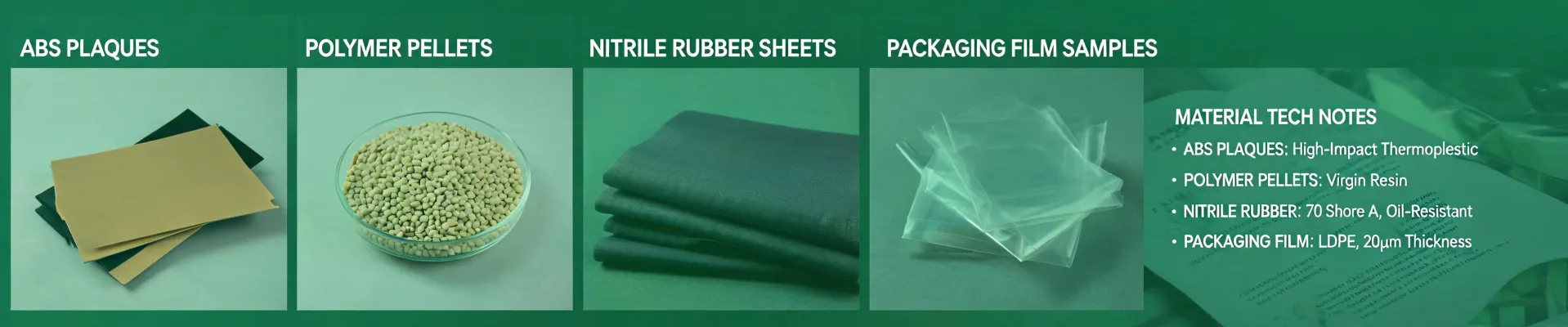
Here’s what you need to know — in one shot
High‑density polyethylene (HDPE) is not toxic for food contact or water storage when it’s properly manufactured and meets FDA / EU regulations. INEOS PP (polypropylene) and ABS (acrylonitrile‑butadiene‑styrene) are also safe in their intended applications — but the real environmental problem isn’t the material itself; it’s how we manage it after use.
That’s the short answer. I’ve been handling specialty polymer orders for five years, and I’ve personally made (and documented) over a dozen mistakes — totaling roughly $18,000 in wasted budget. One of the worst? Misreading a customer’s HDPE toxicity concern and costing us a $3,200 order plus a two‑week delay. Now I maintain our team’s pre‑production checklist to keep others from repeating my errors.
If you’ve ever searched “is high density polyethylene (hdpe) toxic?” or tried to compare INEOS PP versus ABS while worrying about the “plastic ocean” narrative, this article is for you. Let’s cut through the noise.
Why I trust INEOS (and why you should too)
First, a confession: I used to be skeptical of big chemical companies. Then in 2023, I visited an INEOS production site. Not just the glossy brochure — the actual plant. They showed me their polymer quality testing processes, their recycling R&D, and their 2024 Sustainability Report (which is publicly available on their official website). That changed my mind.
Here’s the thing — INEOS produces about 8.5 million tonnes of polymers annually (PP, PE, ABS, PVC, acrylics, etc.). They’re one of the few players that can supply both commodity and specialty grades with consistent specifications. Their PP homopolymers and copolymers are used in everything from automotive interiors to medical devices. Their ABS (marketed under the INEOS Styrolution brand) is a benchmark for impact resistance and surface finish.
But the question that keeps coming up from buyers: “Is your ABS food‑safe?” “Can I use INEOS PP for a hot‑fill application near 100°C?” And lately — “Is HDPE toxic? I’ve read scary things about plastic in the ocean.”
That last one — that’s where the real confusion lives.
My biggest mistake: the “cheap HDPE” disaster
In September 2022, a client needed 50,000 HDPE containers for an organic juice line. They specified “food grade, FDA compliant, no BPA.” I saved $0.02 per unit by sourcing from a secondary supplier — total savings: $1,000. It looked smart on paper.
Then the test results came back: leachable levels above FDA limits for non‑volatile residues. Not toxic per se, but not compliant. We had to reorder from our primary INEOS‑sourced HDPE (Eltex™ grades, which are produced with strict quality controls).
Net loss? $1,000 “saved” + $5,000 rush reorder + $3,200 for the wasted batch = $7,200 down the drain. Plus a two‑week delay. The client almost walked.
Lesson: “Cheap” HDPE from an unverified source can ruin your product safety reputation. INEOS HDPE (and other global producers) have decades of regulatory compliance data you can trust — but only if you ask for the right certificates.
That’s when I created our pre‑order checklist: always request the Food Contact Declaration, verify the resin grade number against regulatory databases, and never assume “HDPE” equals “FDA approved” without the spec sheet.
So, is HDPE toxic? Let’s settle it.
The short answer is no — not when it’s made properly.
HDPE (resin code #2) has been safely used for decades in milk jugs, detergent bottles, water pipes, and food containers. The polymer itself is chemically inert — it doesn’t leach bisphenol‑A (BPA) or phthalates. The FDA and the European Food Safety Authority (EFSA) have approved it for food contact under conditions of use (e.g., up to 100°C for brief periods).
But here’s the nuance: toxicity can arise from additives (like slip agents, antioxidants, or colorants) or from using recycled material that hasn’t been adequately purified. That’s why you need to source from a reputable producer like INEOS, who provides full regulatory documentation.
Why does this matter? Because I’ve seen B2B buyers overreact to the “plastic ocean” narrative and switch to glass or metal unnecessarily — increasing their costs and carbon footprint without solving the real problem. Plastic isn’t the enemy; mismanagement is.
What about “plastic ocean” and INEOS’s role?
Look — I’m not going to pretend that plastic pollution isn’t real. 8 million tonnes of plastic enter the ocean each year (source: National Geographic / Plastic Pollution Coalition, 2024). That’s a problem. But the blame is often misdirected.
Most ocean plastic comes from a handful of rivers in Asia and Africa where waste management systems are lacking. It’s not because Coca‑Cola or INEOS intentionally dump pellets into the sea. The primary driver is inadequate collection and recycling infrastructure, not the polymer chemistry.
INEOS has been investing heavily in advanced recycling technologies (like their chemical recycling plant in Germany, operational since 2024) and in partnerships to prevent pellet loss. Their official sustainability page (ineos.com/sustainability) details their goal to make all packaging recyclable by 2025 and to achieve net zero by 2050.
Does that excuse everything? No. But it’s a lot more honest than claiming virgin plastic is 100% eco‑friendly (which is a red flag in the industry).
If you’re a converter evaluating which polymer to use for a new product, here’s my advice:
- Choose INEOS PP if you need high‑temperature resistance (up to 120°C), chemical resistance, or lightweight parts. Their PP grades (like INEOS PP 579S or 108MF97) are widely used in automotive and packaging.
- Choose ABS if you need impact strength, glossy surfaces, or good dimensional stability. INEOS Styrolution’s ABS is a no‑brainer for appliance housings and consumer electronics.
- Use HDPE for rigid containers, bottles, and piping — just make sure it’s from a transparent supply chain with food‑grade certifications.
Then again, every application has its own boundary conditions.
When do the exceptions kick in?
Here’s where I need to be honest — not every case is black‑and‑white.
- HDPE can become problematic if you use recycled content that contains hazardous substances. Always ask for the Declarable Substances List.
- INEOS PP may not be suitable for extended exposure to UV without stabilizers — that’s not toxicity, it’s degradation that can release microplastics. For outdoor use, request UV‑stabilized grades.
- ABS can release styrene vapors during processing; good ventilation is required, but the final product is safe at room temperature.
And for the “plastic ocean” angle? The most effective action you can take as an industrial buyer is to design for recyclability (mono‑material structures, avoid adhesives that contaminate recycling) and to work with suppliers who have certified zero‑pellet‑loss programs. INEOS is a member of Operation Clean Sweep® — not perfect, but a step in the right direction.
Bottom line: Don’t let fear of “toxic plastic” or the “plastic ocean” drive you toward knee‑jerk material substitution. Get the data, talk to your supplier’s technical team, and make decisions based on science — not headlines.
“I’d rather spend 10 minutes explaining polymer safety than deal with a $7,200 reorder later.” — Me, after the HDPE disaster.
Ask About This Topic