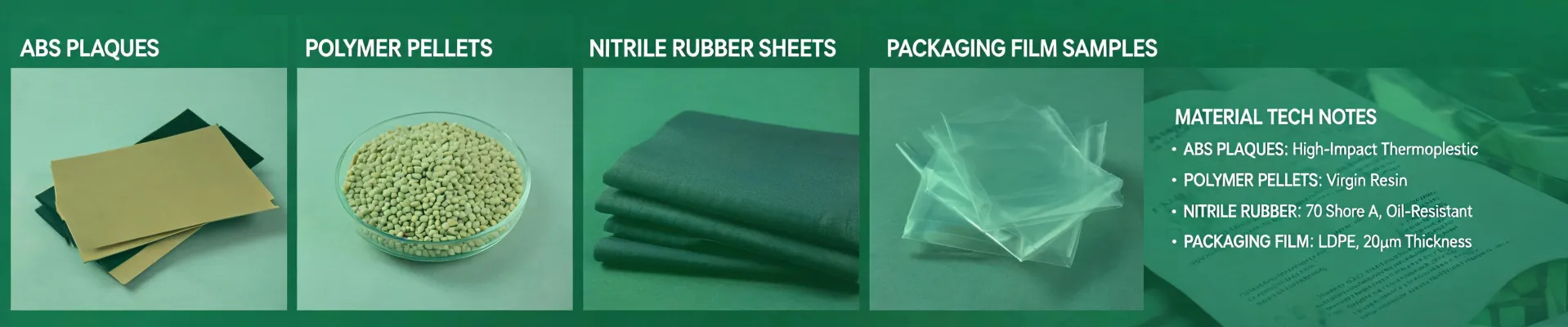
Most material comparisons are written for a design review. This one is written for a purchase order with a deadline on it. The two candidates are Toray's T1100G-class carbon fiber and the engineering plastics that land in the same RFQs—ABS, PC, PA, and their glass- or mineral-filled grades. They are not interchangeable, and I'm not going to pretend otherwise. But buyers keep asking me to pick between them when the clock is running, so here is the comparison I actually run, with a verdict on every dimension instead of a shrug.
Five dimensions: strength-to-weight, lead time and processing, failure mode, brand and claim verification, and landed cost. That's the order I use, because it's usually the order the constraints bind in. I coordinate rush material sourcing for industrial clients—roughly 200 expedited orders over eight years, mostly OEM brackets, housings, and display parts—so that's the lens. If you're qualifying aerospace primary structure or an implantable device, your bar is higher than anything I describe here.
Strength-to-weight, and the part nobody calculates
Toray publishes T1100G at about 6.6 GPa tensile strength and 324 GPa tensile modulus, with density around 1.79 g/cm³. The T300 series in the same family sits near 3.53 GPa. General-purpose ABS, tested per ASTM D638, comes in around 40–50 MPa depending on grade. On specific strength—strength divided by density—the gap runs roughly 85 to 1 in T1100G's favor. On paper, this dimension isn't close. Those are published typical values, not a promise about your batch; ask for the test report before you design against them.
The part that doesn't show up on the datasheet: T1100G is a fiber. By the time it becomes a laminate, the numbers you can actually design against depend on fiber volume fraction, layup, and load direction. A quasi-isotropic laminate might develop 50–60% of the fiber's tensile strength along the primary axis and considerably less transverse to it. That's not a knock on the material—it's ordinary composites engineering. It does mean 6.6 GPa is a starting point, not an answer.
Now the uncomfortable part. For a large share of the parts I get asked to expedite, strength isn't the binding constraint. Take a resin coaster. The load case is a wet glass, maybe 400 grams. The real enemies are heat rings and staining. Specifying T1100G there isn't thoroughness; it's a design error with a premium price tag. Same story for jigs, covers, and most brackets.
What I mean by "binding constraint" is the single requirement that decides the design—if you can meet it with the cheaper material and still pass every other check, then the expensive material is solving a problem you don't have, and it's bringing its own supply chain, its own qualification burden, and its own failure modes along with it. That's the trade nobody puts in the quote.
Verdict: if a load calculation shows a safety factor of 3 or better against the plastic's yield strength, the plastic is the correct choice, not the compromise. So yes—ABS is strong. It just isn't 6.6 GPa strong, and most parts don't need it to be.
Lead time: the bottleneck usually isn't the material
People think carbon fiber lead times are long because the material is hard to make. The reality runs the other way—difficulty is the smaller factor. The bigger driver is that fewer qualified suppliers hold stock, so the moment your spec deviates from a catalog grade, you're in a line behind everyone else who also needed a deviation.
Engineering plastics win this dimension, but only when you can avoid tooling. Strength, weight, cost—pick two, and lead time decides which two you actually get.
The tooling question
CNC'd PC or PA plate is a same-week item, sometimes same-day if the local distributor stocks your thickness. If you need an injection-molded housing, the mold is the lead time and the resin is irrelevant to the schedule. I've watched buyers save $40 a part on resin and lose three weeks to a tool that wasn't cut yet.
The carbon case I remember: a client called on a Tuesday afternoon needing 40 brackets for a trade show demo 60 hours out. Normal lead time on the specified layup was three weeks. We found a stocked intermediate-modulus fabric that cleared the stiffness requirement, ran a short layup, and paid roughly $2,100 in expedite fees on top of a $9,000 base. Delivered with four hours to spare. The alternative was a 3D-printed stand-in—they'd tried that at the previous show, and people noticed.
Verdict: carbon fiber is a project; engineering plastic is a purchase. If the deadline is the binding constraint and the design tolerates it, the plastic route is the one that survives.
Failure mode: where the weaker material wins
This is the dimension where the comfortable answer is wrong. Carbon fiber fails suddenly—brittle fracture, delamination, very little visible warning. Engineering plastics yield, creep, and deform, often visibly, before they let go. In a shop with a torque wrench and no NDI equipment, visible deformation is worth a lot.
"Just make sure it doesn't break" is not a specification. It's a hope with a purchase order number attached.
Plastic surgeons I've dealt with on device housing specs won't accept a material that only "usually" performs. They want a documented failure mode and a batch certificate. Your customer wants the same thing, even when they phrase it differently.
Verdict: for parts that can't be inspected before installation, the material that fails visibly is often the safer choice—even when it's the weaker one on paper. That surprises people. It shouldn't. A predictable weak point is easier to design around than an unpredictable strong one.
The logo, the name, and the claims behind them
A Toray logo on a certificate of analysis means something. It ties a batch to a traceable source with published typical values and gives you a number to call when something is off. A Toray logo on a marketing page means nothing. I've seen purchase orders where the "brand requirement" was satisfied by a supplier's website language and no other evidence. That isn't a specification; it's a wish.
Claims deserve the same scrutiny. Per the FTC Green Guides (16 CFR Part 260), a recyclable claim should hold where at least 60% of consumers have access to recycling for that material. For most carbon fiber composite waste streams, that bar isn't met—which is why "recyclable" tends to appear with conditions attached rather than stated flat. When a supplier won't qualify the claim, that's a signal to ask what else went unqualified.
Verdict: the brand is a shortcut to a paper trail, not a substitute for testing. If the logo doesn't come with a batch number and a test report, it's decoration.
Landed cost, not unit price
Unit price is the wrong comparison. Landed cost is tooling, scrap rate, engineering hours, and the cost of your own time chasing certificates. T1100G usually loses on all four unless the weight savings are the product. ABS usually wins—until the part needs a metal insert because the plastic boss strips under torque, and now you own a secondary operation.
One cost line people forget: certification time. A batch certificate for a composite doesn't arrive by email in an hour, and first-article inspection on a rush order is a day, minimum. Budget it before you quote.
Verdict: run the landed-cost math before the RFQ goes out, not after the first quote lands. The cheap part with the stripped boss ends up being the expensive part.
Which one to pick
Choose T1100G-class carbon fiber when weight or stiffness is the binding constraint, the part has been analyzed and tested, your customer's spec names the material family, and you can either wait or pay to expedite a stocked grade.
Choose engineering plastic when the stress margin is 3× or better, you need parts this week without tooling, the failure needs to be visible before installation, or the application is low-stress and high-abuse—resin coasters, jigs, covers, fixtures.
The rule I've settled on: if a load calculation shows less than 30% of the material's yield strength in service, upgrading the material doesn't buy safety. It buys a validation project. And on a rush order, the validation project is what misses the deadline.
Five minutes with a load calculation on Monday beats five days of rework on Friday. I've paid expedite fees on both schedules, and the Monday version is cheaper every time. I've also been the guy who over-spec'd a bracket because the deadline made him nervous (the invoice was the tuition).
Ask About This Topic